Earlier in the year, March, to be precise, a bill was put forward to the Nigerian Senate, and after thorough scrutiny, as is always the case, was rejected on the basis of religion, in that the provisions of the bill conflicted with the religious beliefs of both Christians, and Muslims, and the Nigerian constitution, as, again, a conflict of provisions ensued. This bill was the Gender and Equal Opportunities Bill. Introduced by Senator Biodun Olujimi, the bill sought the protection of Nigerian women (which, as stipulated, includes the girl child) from violence, while also providing them with the same marital rights as their male counterparts, including the widows’ rights to inherit their husbands property (Independent, 2016).
I begin with this to lay ground regarding my experience as a woman in Nigeria, and as a Nigerian woman. During my formative years, my mother always emphasised the need for our spoken english to be perfect, and proper enunciation was nagged into our subconscious. As a grown woman, I find that strangers’ first impression of me, prior to introduction, is that I must be from the US, as I am well-spoken, with an “accent”. Thus, these people, having never met me before, are inherently kinder towards me, withholding any potential misogynistic statements. They hear me as a foreigner and so, expect that my experiences, ideologies and ultimately, perspective on life, must differ from theirs.
However, once the threshold has been crossed by way of introduction, I become a Nigerian woman. While I take pride in being a Nigerian woman, I remained grossly disappointed and dissatisfied with the way our society treats us. I grew up learning about great Black women in history; Queen Amina of Zaria, Rosa Parks and Harriett Tubman, and how they, exhibited courage, bravery and strength, fighting to ensure they were granted equal rights and opportunities, fighting against the derogatory and condescension the patriarchal society sustained upon the female gender. In Northern Nigeria, however, disturbing regressive and coercive cultural norms have deliberately stifled any sort of progress, particularly for the girl child. These young girls are given off for marriage the moment they are deemed sexually mature, or as they are jokingly called, “ripe”, from ages as young as 13. For us non-Northerners on the other hand, having not being bound by such ludicrous traditions, we have the privilege to wait till more conventional ages. However, the pressure to get married is still very much thriving. As girls, form a very young age, we are expected to aspire to marriage. To view marriage as the ultimate goal; quite like the greatest achievement we, as girls, will make of ourselves – being wives, and mothers. It is nothing short of disheartening, being viewed in such a restricted light, especially as a young lady aspiring to be a successful career woman,
More so disheartening however, is the violence that ensues against women in Nigeria. Violence against women is not a problem exclusive to Nigeria, neither is it a new problem. The Nigerian constitution stipulates that a woman; a wife, is a property of her husband, and thus violating her, is generally viewed as allowed and acceptable by husbands. It is also held by many Nigerians, that a husband is unable to sexually assault his wife, as sex is his marriage right, and so the concept of consent grants the wife the power to deny him said right. This form of violence taking place within the family home was trivialised in the past, compared to its occurrence in public; over the last three decades, however, it has become a major social issue (Merry, 2008).
“The UN Declaration on the Elimination of Violence against Women (DEVW), defines the term “violence against women” as: Any act of gender-based violence that results in, or is likely to result in physical, sexual or psychological harm or suffering to women, including threats of such acts, coercion or arbitrary deprivation of liberty, whether occurring in public or private life…Sexual violence has been defined as any sexual act, unwanted sexual comments or advances or acts to traffic women’s sexuality, using coercion, threats of harm or physical force by any person regardless of relationship to the survivor in any setting. The scope of this definition has been expanded to include forced sex, sexual coercion, rape and child abuse.” (UNESCO; Krug et al. (2002); Salesman et al. (1999): cited in Oladepo et al., 2011).
As mentioned earlier, this is not a problem exclusive to Nigeria, but there is something to be said about the religious and cultural factors that have not only hindered, but blatantly halted the necessary change that we should be moving towards.
My primary and secondary educations taught me that culture was a way of life of a group of people; the customs and traditions by which people lived their lives. It was also emphasised upon, however, that culture is dynamic. We were given examples of practices that were considered tradition, but are no longer customary, for example, the killing of twins in Efik culture, which was abolished by Mary Slessor. Thus it begs the question, if culture really is dynamic, why do we choose to remain stagnant, whilst rapidly resorting to the defence of culture when seeking to uphold and sustain restrictive, regressive practices?
Whenever a Nigerian woman holds the desire to pursue other aspects of her life, whilst refusing to include marriage and child-bearing as priority, she is rebuked and condemned; whenever she seeks to put herself first, cater to her mental health, and leave an abusive relationship, she is advised to “pray” and work it out with her abuser, “for the good of the children”; whenever she reports abuse, gets a divorce, or claims rights in her marital home, and is seen as “doing like onyibo” (behaving like the whites); I weep on the inside because I, as a Nigerian woman, can easily be in either, if not all of the previously mentioned situations. There is this inherent culture of victim-blaming and shaming that prevails in the Nigerian community, where victims of sexual assault are chastised and ultimately blamed for dressing indecently, or deliberately putting themselves in suggestive circumstances, and so held as the ones at fault. Towards the end of 2015, “Nigerian twitter” woke up to the death of a prominent politician, and surprisingly, with his death came the rejoicing of a secondary schoolmate of mine. She took to twitter to express this happiness and hoped that in death, he will endure the suffering and oppression that she lived through from his family. It turns out that this girl, Lotanna Igwe, commonly known as @sugabelly on Twitter, was 16 years old when she got into a relationship with one of his older sons, aged 22 at the time. The relationship, she says, got abusive, as their consensual sexual relations subsequently became aggressive and eventually devolved to coerced sex with his friends and gang rape by him, his brother and cousins. She highlighted that through it all she stayed with him because she loved him.
Lotanna was a young girl in love with a man, whom she thought felt likewise, and going by the UN definition above, was sexually abused. However, Nigerians failed to see it this way. She was ridiculed and dragged through the mud on social media. The alleged sexual offenders referred to her as an instrument of destruction. She was called loose, a whore, and an ashawo; as people believed she enjoyed it, or else she would have left the relationship. It was not all bad however, as a large number of people came to her defence, but it was evident that the masses we attempted to engage with were not as educated, forward-thinking or exposed as we were. It became clear that the women shaming Lotanna were not only less-educated, but unaware of the complexities regarding an abusive relationship. Subsequently, the discourse evolved to Nigeria’s treatment of women, in and out of marital situations. The African patriarchal society is such that there is a gender power structure, the man is the authority in the home and public space, while the woman is the lesser partner, restricted to the domestic sphere of life. Thus, it is included in the school curriculum and taught from a very young age that the woman’s duty is to cater to the needs of her husband and children, and the man, to provide from the family, as the head of the home.
Conversations regarding feminism are increasingly being held amongst the youth of Nigeria, as gender-related issues are very much prevalent, and Chimamanda Ngozi Adichie’s famous TED talk titled, We Should All Be Feminists, enabled a great deal in stirring up these discussions. As a well-renowned female Nigerian author, Adichie’s talk challenged our socio-cultural mindset regarding gender and its prescriptions. With her focus on feminism in Nigeria, she addresses the problems that arise from gender prescriptions, and her desire to challenge this conditions, whilst also recognising that unlearning will be difficult, but a process she is up for nonetheless. Here is an excerpt I find particularly striking, as it encompasses a few of the problems that arise from said gender prescriptions:
“We must raise our daughters differently… We say to girls, ‘you can have ambition, but not too much. You should aim to be successful, but not too successful, otherwise you will threaten the man.’… Because I am female, I am expected to aspire to marriage, I am expected to make my life choices always keeping in mind that marriage is the most important; that marriage can be a source of joy, and love, and mutual support, but why do we teach girls to aspire to marriage, and we don’t teach boys the same?… We say to girls, ‘you cannot be sexual beings in the way that boys are.’” Now, marriage can be a good thing. It can be a source of joy and love and mutual support, but why do we teach girls to aspire to marriage and we don’t teach boys the same?’” (TEDx, 2013)
These are a few of the problematic realities we face as Nigerian women, and with the defence of culture and religion constantly serving as a saviour to the derogation, restriction and coercion prevalent, liberation for us women, to achieve the much needed gender equality, will continue to be a myth.
References
Ifejeme, S. C. (2012) ‘Gender-based domestic violence in Nigeria: a socio-legal perspective’, Indian Journal of Gender Studies 19(1) pp. 137-148 [Online] DOI:10.1177/097152151101900107 (Accessed: 30 August, 2016)
Merry, S.E. (2008) Gender Violence: A cultural perspective. London: Wiley-Blackwell
Oladepo, O., et al. (2011) ‘Factors influencing gender based violence among men and women in selected states in Nigeria’, African Journal of Reproductive Health 15(4) pp. 78-85 [Online] Available at: http://www.ajol.info/index.php/ajrh/article/view/74796/65399 (Accessed: 30 August, 2016)
Payton, M. (2016) ‘Nigerian Senate votes down gender equality bill due to ‘religious beliefs’’, Independent, 17 March [Online]. Available at: http://www.independent.co.uk/news/world/africa/nigerian-senate-votes-down-gender-equality-bill-due-to-religious-beliefs-a6936021.html (Accessed: 31 August, 2016)
TEDxEuston (2013) “We Should All Be Feminists” Chimamanda Ngozi Adichie [Online] Available at: http://tedxtalks.ted.com/video/We-should-all-be-feminists-Chim (Accessed: 31 August, 2016)
© EAO 2016
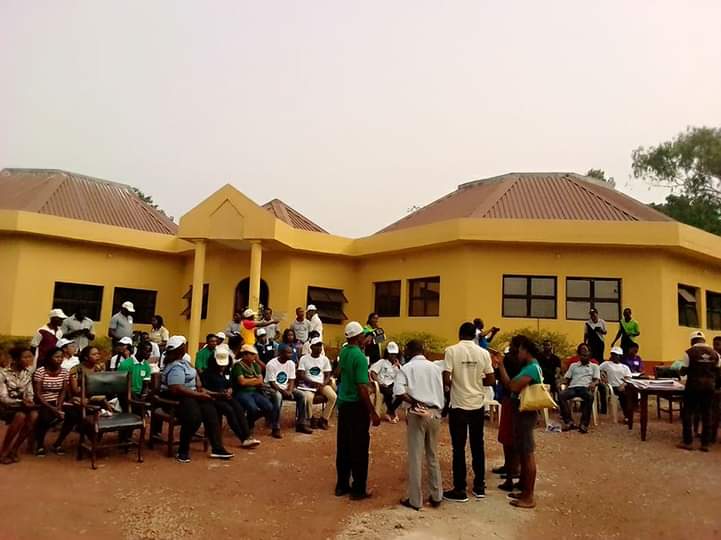


 HRCRC kicked off with a visit to Presco Secondary School, Abakaliki.