

Conflict may be defined as “the strife for the mastery; hostile contest, battle, struggle, fighting between opposition, simultaneous but incompatible feelings or an opposition between persons or ideas; disagreement or argument about something important”[1]. “Land dispute involves conflicting claims to rights in land by two or more parties, focused on a particular piece of land, which can be addressed within the existing legal framework”[2]
Land is a free gift of nature, and so pervasively underpins human activities that it usually plays some roles during civil unrest and conflict. With globalization and rapidly growing population, the demand for land increases. This has also heightened the possibility of land disputes. Dispute over access to land and valuable resources have driven nations, cities, tribes and even families into long drawn overt or covert conflict. It is therefore important that we address the role land plays in the conflicts of many cities – particularly in Ebonyi state. This will help our policy makers develop strategies to ease tension among warring groups, limit conflict and avoid violence and the poverty trap that comes with cyclical violence. Failure to address these issues may increase the likelihood of conflict and perpetual poverty.
Land is the object of competition in various ways: as an economic asset/factor of production, as a connection with identity and social legitimacy, and as political territory. Competition over land and its resources is at the centre of the nexus between land and conflict. This Competition occurs between any number and type of identity groups, based on ethnicity, class, religion etc. However, when the competition involves a group of people rather than individuals, the risk of large-scale violence increases. From personal experience, the struggle over land has posed one of the biggest problems in Ebonyi state. In our society, the struggle over land use and its mineral deposit has been a constant bane.
When land lacks adequate legal, institutional and traditional/customary protection, it becomes a commodity subject to manipulations and abuse. On that note, the Land Use Act 1978, in section 1 provides that all land in the state belongs to the governor, who holds same in trust for the people. Therefore, for a person to acquire interest in land, he must possess a statutory or customary right of occupancy. However, to obtain a right of occupancy, one must have root of title. Under customary right of occupancy, root of title can be established either by being first settlers, by inheritance, by gift or by conquest.
Land conflicts can be persistent as in the case of the Mgbalukwu and Ojiegbe land conflict that lasted 97 years which was finally resolved by HRCRC and the conflicting communities were reunited. It needs to be pointed out here that while local and traditional institutions like village council of chiefs/elders, religious heads, traditional rulers and other local bodies can often resolve local land conflicts, at a certain stage the government must intervene swiftly. When land conflicts escalate to the governmental level, the conflict can be properly managed in a constructive manner.
To properly address land-related conflicts, it is essential to correctly identify the roles played by land in the conflict. What factors create vulnerability to land conflicts and exacerbate tension? Some of these escalating factors include; land scarcity, insecurity of tenure, the lure of valuable resources, historical grievance etc. In the presence of such vulnerabilities, violence is often sparked by a trigger event. These trigger event can be anything that intensifies the vulnerability, even though the conflict was not caused directly by a land issue. For example, in the boundary dispute between Izzi and Ikwo, the subject matter of the dispute was not the land, however based on accumulated grievance and fights, each community barred members of the other community from crossing the border into their territory. By virtue of the not so clearly defined boundary, conflict and violence erupted and many lives were lost.
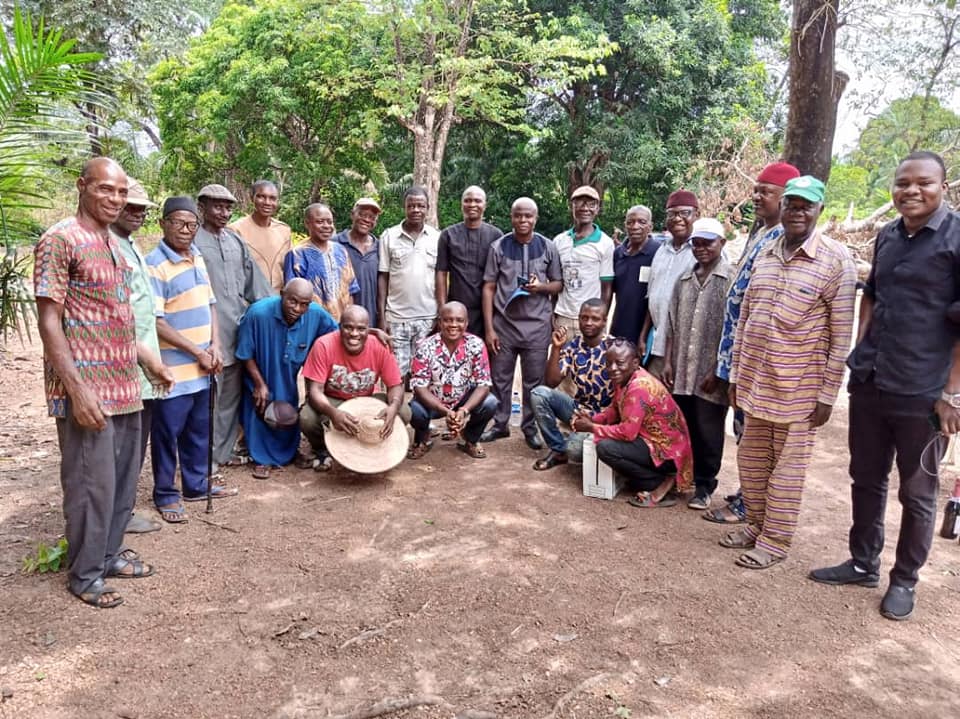
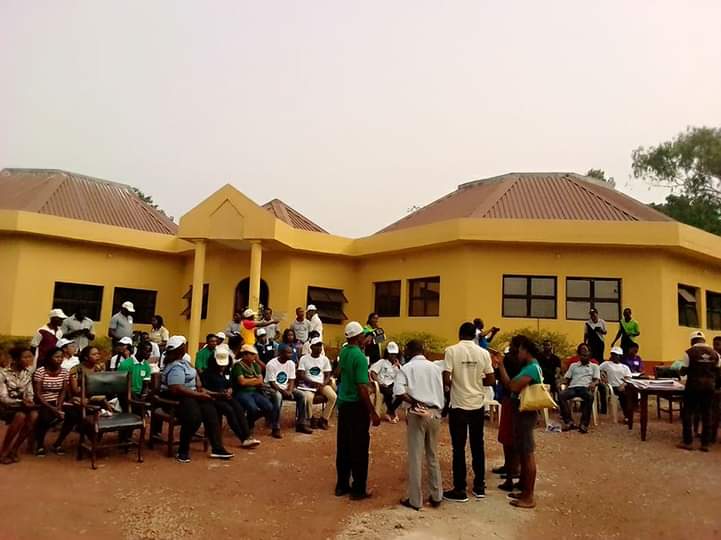
As conflict mediators with Human Rights and Conflict Resolution Centre, department of Peace-Building and Conflict Resolution, we have been going from one community to another reconciling people in conflict over land use in the family level, village and community such as the Mgbalukwu – Ojiegbe conflict mentioned above, the Umu-Oke-egwu – Umu-Aluma of Umunochi Local Government Area in Abia State that lasted for 23 years, and we are currently working on the boundary conflict between the Ukele people in Cross-River state and the Igbagu Izzi people in Ebonyi State.
We register and mediate over 1000 interpersonal, familial, workplace, communal, apprenticeship, landlord-tenant conflicts annually. In my experience as a customary land mediator, I have gathered knowledge in the land tenure system -which works as the mechanism for the acquisition of land in Ikwo, Izzi and Ezza. This tenure system in these communities dictate that all land belong to the community where the land is situated. Under the customary land tenure system, the community together owns the land, and equally holds it in trust for communal and personal use. This power is usually exercised by the elders of the community and the members of the land committee. Whenever there is conflict over land; especially customary land, it is usually because of animosity and unresolved misunderstanding, or parties are not agreeing on what law should apply to them; customary law or the Land Use Act.
There are a couple of measures that can be imbibed; however, there are things only the government can do. Criteria such as efficiency, accountability, public participation, security should be added to the land tenure and urban land management, which will form a good basis for development in the land tenure sector. In all these conflicts regarding land, there is need for mediation, conflict resolution, and involving traditional rulers in land management. This is because court adjudication will be very unsatisfactory to one side, which may fuel another conflict. So mediation is often the best option.
Land conflicts can be minimized if
all these aforementioned approaches are combined as required in specific cases
with respect to existing laws, culture, political and economic conditions of
the prevailing social framework of the communities.
[1] Oxford Advanced Learners’ Dictionary
[2] John Bruce, Karol Boudreaux; Land tenure and Resource Rights Practice Lead, 2013