CAMPAIGN AGAINST RAPE AND SGBV IN EBONYI

.

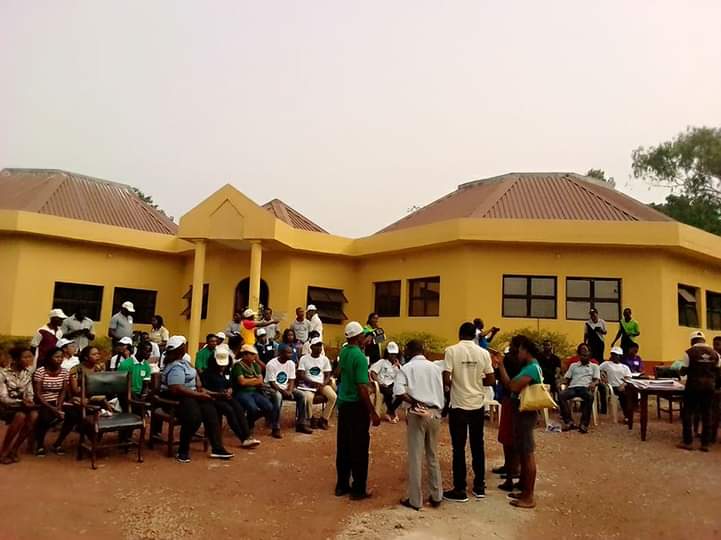
HRCRC, in collaboration with the National Human Rights Commission NHRC, and other CSOs in Abakaliki – such as Child Protection Network, Human Rights Defenders, Neighborhood and Environmental Watch Foundation, the National Girls Guild, amongst others, – embarked on a week-long campaign and protest against Rape and all other forms of Sexual and Gender Based Violence (SGBV).

The campaign which was kicked off with a roadwork around Abakaliki metropolis; and subsequently the protest was taken to the Wife of the Governor, the Commissioner for Information, the Commissioner of Police, the Chief Justice and Judiciary, the Attorney General and Commissioner for Justice, CAN, the Islamic Community, the State Legislature, amongst others.

Now the campaign is over, the work starts.

The Term “Next Of Kin” Simpliciter, Does Not Confer The Right Of Inheritance On The Person So Named: Of What Use is the term?

The meaning and the legal implication of the term “next of kin” have been constantly misunderstood by the ordinary public. It appears, though erroneously, that many people think that once you are appointed the next of kin of a person, it automatically gives you the right to inherit the person’s estate upon his demise. In fact, many people think that, a next of kin gives an exclusive right over a person’s property.

The above erroneous believe and understanding of the term next of Kin has made many people to shy away from the need to make a Will. This is because, they think appointing a Next of Kin, is a way of naming your beneficiary. However, the above assumption is not in conformity with the law. It must be noted that, ignorance of the law is not an excuse.

WHAT THEN IS THE MEANING OF THE TERM “NEXT OF KIN”?

The term, next of Kin has been described as the nearest blood relative of a person. See JOSEPH v FAJEMILEHIN O.O & Anor (2012) LPELR-9849(CA). The term can also refer to a person who can be contacted or notified in cases of emergencies or eventualities. For instance, one of the forms that is usually filled while on transit, requires the information of next of kin. This is needed in case of any accident. In other words, where there is an accident involving that person, his next of kin shall be notified or informed.

Also, the term is constantly put into use by hospitals. In this case, next of kin means a person who can make medical decisions for a person who is incapacitated or unable to do so, during emergencies.

The term is also frequently used in financial documents by banks and other financial institutions. In this instance, next of kin means a person who can ensure that the proper steps are taken towards the recovery of the money held at the bank, at the demise of the owner. In other words, being a next of kin of a person, as regards his money in the bank, does not give a right to inherit such money, either partly or as a whole.

WHAT IS THE LEGAL IMPLICATION OF THE TERM NEXT OF KIN AS IT RELATES TO THE LAW OF SUCCESSION?

It must be noted that appointment of a next of Kin is not a substitute to the making of a valid WILL. The reason is because, when a person dies testate (that is, the person made a valid Will), the matter of next of kin is of no relevance. The estate of a deceased person who dies testate is distributed strictly according to the Will. Thus, his next of kin will only be entiled to his estate, if the WILL says so.

On the other hand, in a situation where the deceased died intestate (that is, without making a valid Will), the question of the distribution of his estate is governed by the law. The customary law/Islamic law or the Administration of Estate Law will apply depending on the kind of marriage contracted by the deceased. In other words, if the deceased contracted a statutory marriage (popularly known as court marriage), the distribution of his estate shall be governed by either the English Law or the Administration of Estate Law. See OBUZEZ V OBUZEZ (2007) 10 NWLR (Pt.1043) 430. It must be noted that the Administration of Estate Law provides for the order of inheritance which must be complied with strictly and a next of kin, is not among the categories of those entitled to inheritance in this instance.

In other words, Succession is regulated by law. It is only those entitled by law to inherit a deceased person’s estate that can do so. A next of Kin is not one of such persons. However, this is without prejudice to his right to inherit on a personal ground. Thus, if the person so named as a next of kin is the son of the deceased, he is entitled to inherit, not as a next of kin, but because he is the legitimate son of the deceased. Also, if the person so named as a next of kin, is also named in a valid Will made by the deceased, he is entitled to an inheritance not because he is a next of kin, rather, because, he is named in the WILL.

CONCLUSION

A next of kin, who is usually a blood relative, though not always, has no legal right of inheritance by virtue of his status as a next of kin simpliciter. However, it must be noted that the appointment of a next of kin is not a means or method of naming an heir. A next of Kin is not recognised as an heir under the Nigerian law of succession.

Therefore, next of kin, stricto sensu, does not by any stretch of imagination, entitle the person so named an automatic right of inheritance. If the person so named as a next of kin is not entitled either by the WILL or by other laws of inheritance, to inherit, he cannot be conferred with the right of inheritance by the mere fact that he is named as a next of kin.

It is hereby submitted that when it comes to the law of succession, the term next of kin has no legal implication. It therefore does not confer the right of inheritance. Thus, it is erroneous and unlawful for anyone to claim any inheritance on the singularly reason that he is named as a next of kin. Such claims have no legal bases and are unfounded.

Thanks
HRCRC and other rights groups confronts Primitive form of punishment and rights abuse in Ebonyi State

Pastor Okochi Chukwu Obeni, the latest victim of jungle justice and primitive punishment – as well as intimidation by the political class in Ebonyi state. He is from Ohaechara Eziome Okochi, Amasiri community, Afikpo North LGA of Ebonyi State. Two days ago, following a Facebook post he made, perceived to be distasteful to the chairman of Afikpo North LGA, Hon. Oko Enyim; a TA to the governor, Hon Amadi Julius Nyerere and a supposed Isi Oru Community leader, Abidi, Amicable Ikechukwu boldly led a group of boys who abducted him, tied him up at first and ordered him to face the sun for over an hour which almost left him blind.

After that, they bundled him like a common criminal, threw him into a dirty gutter and allowed him to swim for 30 minutes. After which they ordered him to crawl out of the gutter before they began to lash him with a cane. Each of the boys was charged to give him 10 strokes of the cane. According to the victim, he had received a total of 35 strokes on his buttocks before he was bailed out the remaining strokes of cane were bought off with money.

Visit HRCRC Facebook Page – HRCRC. Abakaliki for a video of the torture he endured or click on the link https://web.facebook.com/oti.abali/videos/3542194455796429/UzpfSTI0MjY0NTU0MjkyMjU0NDo4NzQwMjc0MTY0NTEwMTc/

Torture and jungle justice in Amasiri, Ebonyi State

HRCRC, in conjuction with HURIDE visited Afikpo to see the wounded Pastor Okochi and we discovered that he has not been able to use his hands on anything and can’t even sit on his buttocks since after the attack. He has been taken him to the Federal Teaching hospital, Abakaliki where he is currently receiving treatment; whilst legal actions have commenced.

Child Abuse and Neglect Due to COVID-19 Lockdown

Despite the partial lockdown, HRCRC was besieged within the last month with a medley of matters that mostly resolved around domestic violence and gender abuse, child abuse and even trafficking amidst others. Women and Children are worst hit as they suffer the brunt of the frustration in society due to the pandemic and the plethora of the attendant effects…
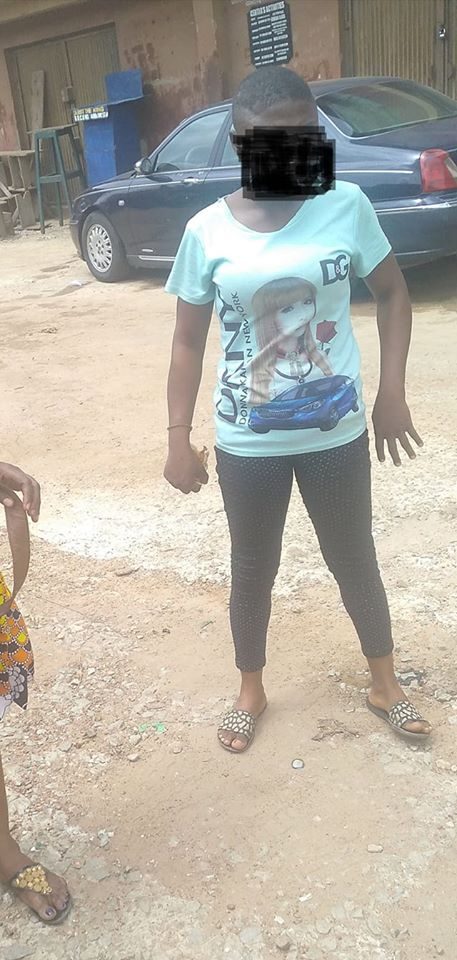
Pictured here is Gift (15), who is here in Abakaliki, working in a restaurant to raise money to eat. She has no knowledge of her home town, or her parents names or dates and times of her sojorn to her present life.
Through investigation, HRCRC has contacted her elder sister, who will come to identify and will lead HRCRC to her parents after the lockdown. After consultations with security agencies, she currently lives with a good Nigerian who volunteered to, whilst HRCRC monitors her welfare.

Gift (15)

Also, a One year old baby consistently abandoned by his mother for one day or more in many instances to either go to the market to sell, or travel to buy goods…
Whilst we acknowledge the economic reality of Nigeria and Ebonyi State that may warrant this single mother to try to legitimately earn income to cater for her needs and that of her child, HRCRC cannot and will not stand for any form of child abuse: especially in the subtle almost acceptable form of NEGLECT….

WHAT IS IN A GIRL CHILD? – by ChukwuEmika Udedibor ESQ and Chioma Ikegbunam ESQ

In Igbo land children are highly valued and cared for because they are regarded as wealth – both in the literal and metaphorical sense. In most Igbo cultures including Ebonyi, extended families look with anticipation to the eventual celebration of their daughters’ marriages and the Umunna cannot wait to partake of joyous feast and of course the bride price and cultural demands from the groom’s family. Their sons on the other hand are cherished for a more apocalyptic reason – the fear of losing a lineage or the continuation of a family name.

Thus, lack of children is suggestive of a curse by the gods or consequence of an action or inaction by the couple; or even worse still not by the couple themselves but their generations past. Children are therefore imperative for couples.

However, over time, families began to value the continuation of the family name – which a female child losses at marriage – and male children gradually began to assume more significance over female. And so there is not-so-complete joy at the arrival of only female children in a family. The birth of a male which is considered as a good omen to an Igbo family is often heralded with greater delight than that of a female child. This preference of male children has become so unhealthily intense that in emergencies and disasters, many Igbo parents selectively attend to their male children. A pathology such as this was one of the unreported and undocumented tragic tales of the civil war – many parents fled with their sons, livestock, bicycles, clothing and jewelries, leaving their female children behind.

After all the hullabaloo of the birth, the children are then raised and nurtured differently as occasioned by cultural constructs and circumstances before their birth. Male children are consequently raised and socialized to see themselves as future heads of households, breadwinners and possessing superior authorities over their wives and children while the female children are taught to be obedient , submissive , meek and humble housekeepers; trained  and prepared almost exclusively for the inevitable task of child bearing, nurturing, rearing and protection. Thus socially, the male child suffers less rejection, prejudice, discrimination abandonment than his female counterpart.

This evidently irked Chimamanda Adichie as much as it irks me to make her lament ‘We police girls. We praise girls for virginity but we don’t praise boys for virginity and it makes me wonder how exactly this is supposed to work out; since the loss of virginity is a process that usually involves two people of opposite genders’.[1]

Furthermore and ironically, some families devote more and sometimes unhealthy concentration on the girl child to the detriment of the boy child because the former are perceived as more vulnerable, prone to abuse and social vices; and the latter do not need as much attention. A conventional parlance the traditional society employs to forgive the excesses of the boy child is Boys will be Boys. This imbalance in their perception, acceptance and upbringing thus culminates in a society prone to abusing the other gender; if for no other reason but to compensate for the lack or excess they see in the other gender but do not enjoy. Whilst the boy child is prone to abuse, social construct of the traditional Igbo society has cultivated the soil for the physical, emotional or sexual abuse of the girl child. Sad! What is even sadder is that these children are very under aged; – a crime known as Defilement.

This crime – defilement is now very rampant in Ebonyi state and the world at large – maybe because due to civilization more victims are speaking out.

Section 277 of the Child Rights Act of 2003 defines “a child as a person who has not attained the age of eighteen. Definition of Sexual Defilement varies in different jurisdictions as there is no universal accepted legal definition to it. Child’s sexual defilement is defined by African Network For the Prevention and protection against Child  Abuse and Neglect (ANPPCAN) Nigeria Chapter Annual Report (Abuja ANPPCAN  2007) ‘as a behavior that exposes a child below 18 years of age to sexual content in which the child is used to obtain sexual stimulation and gratification’. The rampancy of these cases of defilement of minors in Ebonyi State has given rise to the contemplation of making it a capital offence in other to curb the steady alarming trend.

It is more disheartening that Parents, uncles, religious leaders and generally persons of trust are the prime perpetrators of this crime and pitifully, society has made it uneasy for victims and their parents/guardians due to stigmatization thereby worsening the trauma. It is pertinent to note that a civilization relies on the individuals it produces and these individuals in turn rely on the civilization that produce them. Therefore, it is safe to aver that the vices perpetuated today such as defilement of minors are a product of the civilization that has produced our children and these children are now birthing a civilization of defilement. The vicious circle continues unless drastic measures are taken.

Measures such as balancing the imbalance of nurturing genders differently and disproportionately because of cultural dictates must stop. The idea that the girl child needs more attention thus is overly protected socially especially to the detriment of the boy child breeds an unhealthy disparity. The boy child slowly develops the abusive tendency from childhood, which is either not noticed due to inadequate attention or ignored because of societal and cultural tolerance for chauvinism. Thus parents must learn to be very proportionately observant and curb these trends and tendencies. Respect for the female gender must be inculcated into the male child.

All staff and volunteers of HRCRC have undergone a child safeguarding and protection training and have signed up to the Safeguarding Policy of St. Patrick’s Missionary Society – our mother organization. It is armed with this policy and other instruments such as the Child Rights Act/Law and VAPP that we go sensitizing the public on safeguarding not only the girl child but all children because they are the civilization and future we live for today. Let us collectively build a non-gender biased society that guarantees equal rights, equal opportunities and equal benefits for every individual.


[1] Chimamanda Ngozi Adichie’s We should all be feminists