

CONCERNED CIVIL SOCIETY ORGANISATIONS CSOs IN EBONYI STATE STATEMENT IN RESPONSE TO THE RECENT EVENTS IN NIGERIA, AND IN EBONYI STATE.

We have followed keenly the recent developments in the country as especially triggered by the #ENDSARS protests. Acknowledging the fundamentality of the right of citizens to show their grievances through peaceful protests, we also have watched keenly as the largely peaceful protests against Police Brutality and Extrajudicial Killings metamorphosed into a general dissatisfaction with governance and the political class in the country.We also watched as attempts were made to forcefully dislodge the protesters by the Police in Abuja, and other security agencies around the country; failing this, the largely peaceful protests were hijacked by violence around the country.

We also watched in shock as on Tuesday 20/10/2020, after a series of very questionable prior events, men in military camouflages and fatigues invaded the Lekki toll gate in the dark – the widely acknowledged site for the peaceful protests even when there were pockets of violence in other parts of the state – and shot at peaceful protesters who were waving Nigeria flags and singing the National Anthem.This attack Cascaded into an uproar that has turned violent around the country – with attacks on private and public properties, attacks on police officers and police stations, attacks on security personnel, violent protests and attempted jail breaks in at least three states and correctional centres around the country.

We also acknowledge various State Governments’, [including Ebonyi State’s] – responses in different localized and contextualized ways to the uprising in their territories. In response the loud clamour for robust mature leadership around the country, the President of Nigeria – Muhammadu Buhari – addressed the Nation in a speech.Predicated on the above, we declare as follows:

• We categorically condemn the widespread outbreak of violence, looting, arson and other forms of destruction of private and public properties. This does no good in furthering the original aim of the protests, but only serve to further put strain on the already taut Nigerian Economy and political space.• We also vehemently condemn the attack on security personnel and agencies as well as correctional centres. These attacks only serve to make the attackers become that which they condemn by the very attacks. Furthermore, it must be stated categorically that the POLICE AND OTHER VICTIMS ALSO HAVE HUMAN RIGHTS.• We are also appalled by the lack of responsibility of the leadership class in all levels who have continued to deny culpability and responsibility and instead trade blames; this is despite overwhelming video evidence of said attacks.• Therefore we strongly call for the RESIGNATION OF THE CHIEF OF ARMY STAFF – Lt. Gen. Turkur Yusufu Buratai, and THE INSPECTOR GENERAL OF POLICE – IGP Mohammed Adamu for incompetent leadership and crimes against humanity.• We demand that the National Assembly summons the President and other responsible parties to give a REAL explanation to Nigerians on the state of the Nation and concrete and practical steps being taken to forestall further break down of law and other, and build trust of the populace in government and security agencies.• We demand for the prosecution of already indicted officers of the defunct SARS by earlier constituted Judicial Panels; and indeed all other indicted officers and persons. It is our firm belief that this will help begin the process of healing, the feeling of being heard and trust in the government by the populace.• We affirm strongly that the President took too long to speak or act vis-à-vis the current realities confronting Nigerians; and even when he eventually spoke, we affirm that his speech was strongly deficient in presidential character, empathy and was very detached from the burning existentialism of the country. His silence on many issues, but especially on the Lekki Toll Gate event, general tone and monologue’s rhetoric of his administration’s economic plan / achievements was both insensitive to the lives of the armless defenceless wounded and allegedly killed protesters. It was thus sharply contradictory to the President’s assertion that the protesters’ voices have being heard loud and clear. Ergo, it was a very disappointing outing that did nothing to calm already frayed nerves, nor did it unite or give hope.

• We commend the Ebonyi State Government for promptly setting up and commissioning an 8 – man Judicial Committee to investigate extrajudicial killings and Human Rights violations in the State.• We also positively affirm the setting up of a Human Rights Complaints Office and the reporting channels available and we urge the general public to explore this opportunity to seek justice and judicial redress.• We are however concerned about the constitution of the Judicial Panel – especially the process and criteria for the selection and appointment of the Civil Society Representatives in the Committee.• We also are worried about a new machete-wielding red-wearing security outfit – AYA – currently parading the state capital. While we acknowledge and appreciate the pressure the government at all levels must be dealing with at the moment; especially in fulfilling their primary duty of Security of lives and properties, and also acknowledge that the new machete-wielding red-wearing neighbourhood watch might be a necessary security decision, we are however forced to state that if the motive for this AYA group is to induce fear amongst the residents of the state, as opposed to a feeling of security, then they are succeeding excellently.

Finally, we sympathise with the many Nigerians, officers and civilians who have lost their lives or were wounded during the course of the last few weeks of protests. We therefore urge our fellow youths to eschew violence, sheath their swords and re-strategize to engage with the government so that the reform we so earnestly desire will be achieved.We hope and pray that the labours of our heroes past and present shall never be in vain and that this prayer of our founding fathers may be answered;O God of Creation, Direct our noble cause. Guide our leaders right and help our youths the truth to know. In love and honesty to grow, living just and true, great lofty heights attain, so we can build a nation, where peace and justice shall reign. Amen.

Signed:

George Etamesor for Human Rights and Conflict Resolution Center, (HRCRC), Abakaliki

Ajah Chima Oliver for Development and Intergrity Goal (DIG) Foundation, Abakaliki

Samson Oko-Nweke forHuman Rights Defenders of Nigeria (HURIDE), Abakaliki

Office of the Citizen

THE NIGERIA POLICE ACT AND WHAT YOU SHOULD KNOW UNDER THAT NEW AMENDED LAW🇬🇦.

The Act comes with innovations every Nigerian should know. Spare a minute or two to go through them:No:18 concretely reemphasizes a provision affirmed by the accented and just domesticated ACJL…

1. The general objective of the Act is to provide an effective police service that complies with the principles of accountability and transparency, protect human rights and freedom. See Sec. 1.

2. The duty of the Police is to prevent and detect crimes, protect the rights and freedom of suspects and non-suspects in accordance with the Constitution, the African Charter on Human and Peoples Rights and any other law. See Sec. 4 (a).

3. Just like in the movies, Nigeria can now have private detectives who are not employed by the government. The Nigeria Police Force is responsible for vetting and approving the registration of Private Detective Schools and Private Investigative Outfits. See Sec. 4(i).

4. The Police is mandated to report the findings of its investigation to the Attorney General of the Federation or State as the case may be. See Sec. 32(1).

5. The Act prohibits the Police from arresting anyone based on a civil wrong or breach of contract. See Sec. 32(2).

6. The Act equally prohibits the arrest of any person in place of a suspect. See Sec. 36.

7. The Act makes it mandatory on the police officer or any other person authorized to effect an arrest to inform the suspect his rights to:i. Remain silent or avoid answering any question until after consultation with a legal practitioner or any other person of his own choice. See Sec. 35(2)(a).ii. Consult a legal practitioner of his own choice before making, endorsing or writing any statement or answering any question put to him after the arrest. See Sec. 35(2)(b)iii. Free legal representation by the Legal Aid Council of Nigeria or other organizations where applicable. See Sec. 35(2)(c).

8. The Act also makes it mandatory on the Police to notify the next of kin or relative(s) of the suspect immediately after the arrest of the suspect. See Sec. 35(3).

9. A suspect shall be accorded humane treatment. And a suspect shall not be subjected to torture, cruelty, inhumane or degrading treatment. See Sec. 37.

10. The statement of a suspect can be taken only when he wishes to make a statement. See sec. 60(1).

11. The statement, where the suspect wishes to make one, MAY be taken in the presence of a legal practitioner or any other person or organization of his own choice. See sec. 60(2).

12. Where a suspect is arrested and detained for more than 24 hours, if the offense he was arrested for is not a capital offense, his lawyer or relatives can notify any court that has jurisdiction to try the matter about his arrest. See sec. 64(1).

13. The notification can be made in writing or orally. See sec. 64(3).

14. The court SHALL order the production of the suspect and inquire into the matter. Where it is convinced that the suspect should be released on bail, the court shall admit him to bail.

15. The Police are mandated to take the photographs and fingerprint impressions of all suspects who are in lawful custody. See sec. 68(1).

16. Where a suspect refuses to allow the Police to take his measurements, photograph and fingerprint impressions, the Police can the right to apply to court compel the suspect to submit himself. See sec. 68(2).

17. On the last working day of every month, an officer in charge of a police station must report to the nearest magistrates the cases of all arrests made without warrant in his jurisdiction, whether the suspect have been admitted to bail or not. See sec. 69(1).

18. By section 66(1) of the Police Act 2020, ONLY a Police Officer who is a LEGAL PRACTITIONER, can prosecute. Section 23 which hitherto gave non-Police lawyers prosecutorial powers no longer hold any potency in law, the entire old Police Act,cap P.19,LFN,2004, having been REPEALED by the Police Act, 2020 recently ASSENTED to by Mr. President.In effect, any prosecution by a non-Police lawyer is null and void, and of no effect whatsoever – by virtue of section 66(1) of the Act(supra). Thus, it’s a legal ground for objection to any prosecution being conducted by a Police Officer who is NOT a LEGAL PRACTITIONER.

That’s one of the high points of the new Police Act 2020.

WHAT YOU NEED TO KNOW WHEN DIRECTED BY THE POLICE TO WRITE A STATEMENT:

If the police ask you to write a statement, which they normally do when they stop you on the road and take you to their station or when they invite you to their station, you should know how to write a good statement that will not implicate you. First, whether you write a statement as a witness or as a suspect, you must understand that your statement is very likely going to be used against you either in court or for the purpose of blackmail by some officers (not all). Therefore, take your statement writing as a serious matter. Remember that you have right to refuse to write a statement until your lawyer is present. But this normally leads to argument and hostile reactions from the police, and it may likely be a pretext for them not releasing you immediately. There are no hard and fast rules as to the content of a statement. It is supposed to be what you know in relation to an incident or the reason for you being brought to the station. Since the statement is not just a general view on anything you like, it is important that you know the reason for which you have been brought to the station. For those who have been suspected of committing an offense, make sure that before you start writing a statement, you ask the officer the offense for which you have been brought to the station. If he tells you that there is no offense, that they just want you to tell them all you know, you can politely say: No, Sir. The police force is meant to enforce the criminal law. Therefore, the police would not have any justification to bring you to the station except if they suspect that an offense has been committed somewhere by somebody – either you or someone else. And you need to know the offense and the person suspected before you could write your statement. Also, if you were arrested or invited as a result of a petition written against you, you must demand to read carefully that petition before you start giving your statement. When you start your statement, make sure you explain in your statement the reason for which you have been asked to make your statement. For instance, you can say something like: “I was stopped while driving my vehicle with registration number xxxxx on ________ street in _______ city. After showing my papers to officer xxxxxxx, I was taken to the police station and informed that my car was suspected of being stolen car”Then you make your statement. You will see that the police will not like this. But you should be able to state the summary of the circumstances that led to you having to make a statement in the station. I will say more about writing statements at police stations. For now, just get the idea that you should explain why you are making a statement and the offenses you were told you were suspected of. You should state that in your statement before you begin to write other things.

POST SCRIPT: The reason you have to state in your statement the reason for making a statement is obvious. Your statement when read by a third party can only make sense in the context of the matter that prompted the statement. So, if you didn’t state the matter to which your statement relates, the police may change the matter down the line. Initially, you thought you were arrested because of stolen vehicle, but the police later charged it to kidnapping. If a judge is reading your statement in a kidnapping case, he will think you were evading the issues. He will think you were dodging the matter that you don’t want to answer the question. And he will form a negative opinion of you based on your presumably inconclusive and evasive statement . So be careful and be wise(C) Emeka Ugwuonye

The Presumption of Innocence vs The Presumption of Guilt; The Nigerian Bail Story.

In Nigeria, every person (including suspects and defendants/accused persons) is assumed to be innocent until a court declares a person guilty. This is a constitutional right that should not be violated by any person (including law enforcement agencies, institutions, leaders and government). However, the reverse is the case, with overzealous law enforcement agencies, going in the circles of; abuse, arrest, abuse, detain and abuse again before taking the suspect to court (if the suspect is fortunate to be arraigned). In Nigeria, “Bail” is mostly seen in law books and movies, since many suspects are detained without bail for weeks in all parts of Nigeria and lawyers get beaten up for seeking bail for clients. This work reveals the quickest means of obtaining bail after 24 hours of arrest in any part of Nigeria.

There is a big gap between criminal law and human rights as contained in our law books and as applied in reality. There are three groups of law enforcement agents in Nigeria; the first group understands the law and applies it thoroughly, the second group understands the law but will not apply it due to corruption, nepotism and fear while the third group does not understand the law and does not care. Unfortunately, the last group seems to be dominating followed by the second group, as such human rights suppressed. Among the concerned human rights are; right to life, right to dignity of human person, right to personal liberty, right to fair hearing and right to freedom of movement.


The essence of bail is to enable a suspect to go home and about his affairs while ensuring the suspect will at a later date, appear in a given place (like the office of a law enforcement agency or in court for investigation or to answer to his case). Bail is not a privilege or favour done to a suspect rather a right of a suspect. Remember that a suspect is not guilty so he/she should not suffer or be treated as if he is guilty. Consequently, a suspect that is detained for an offence not punishable with death (non-capital offences) is entitled to bail within 24 hours of being arrested.

The police (any law enforcement agency) time for detaining a suspect arrested for an offence that is not to be punished with death (non-capital offences) is 24 hours. Time starts counting from the moment a person is arrested, ceased or appears to answers an invitation of a law enforcement agency (whatever the language/term, so far as a person is no longer free). So, once a suspect is arrested, the law enforcement agency must ensure that its further investigation, bio-data capturing, granting of bail and seeking for advice, approval and any indoor management/protocol is completed within 24 hours. Where a suspect is detained beyond 24 hours for an offence that is not punishable with death, the suspect can be granted bail by a court having jurisdiction over the offence.

In Nigeria, a detained person may not be allowed to approach a court to seek his own bail or to even access a lawyer of his/her choice, by overzealous law enforcement agents working on ignorance or corruption. Hence, where a suspect is not granted bail by a law enforcement agency within 24 hours over a non-capital offence, any person can go to court and institute a case against the concerned law enforcement agency (and its agents) on behalf of the suspect. The court will order the suspect to be produced (brought to) court and inquire into the circumstances of the detention. Where the court desires, the court will grant bail to the suspect. The required application for bail in court, can be written or oral, even if the court is a superior court (High Court/Federal High Court/National Industrial Court).

It is better to engage a lawyer to assist with bail application in court. Bail is a right and not a favour. Bail is free because it is a constitutional and fundamental human right, provided freely by the Constitution of Nigeria. Report any law enforcement agent, court staff, magistrate, judge or legal practitioner that request for money/gift in order to grant bail. However, a legal practitioner is entitled to charge for his legal services but no to charge any fee to be paid as bribe or gift for bail.

My authorities are:

1. Sections 32, 161, 162, 163, 164, 494 and 495 of the Administration of Criminal Justice Act 2015 and its equivalent in states across Nigeria.
2. Sections 34, 35, 36, 230, 237, 249, 255, 260, 265, 318 and 319 of the Constitution of the Federal Republic of Nigeria 1999.
3. Judgment of the Supreme Court of Nigeria (on the nature and effect of Bail) in the case of SULEMAN & ANOR v. COP PLATEAU STATE (2008) LPELR-3126(SC)
4. Judgement of the Supreme Court of Nigeria (on bail) in the case of UGWU v. STATE (2020) LPELR-49375(SC)
5. Judgement of the Court of Appeal (that every person is presumed innocent) in the case of ALAYA v. STATE (2007) LPELR-8841(CA) citing Eyu v. The State (1988) 2 NWLR (Pt.78) 602 at 610, Abiola v. FR.N. (1995) 7 NWLR (Pt.405) 1 at 155
6. Judgment of the Court of Appeal (on whether bail can be granted in non-capital offences) in the case of OGEDE v. FRN (2018) LPELR-46816(CA)
7. Judgment of the Court of Appeal (on whether bail can be granted in capital offences) in the case of OGEDE v. FRN (2018) LPELR-46816(CA)
8. Judgment of the Court of Appeal (that oral bail application can be made in any court, including courts of record) in the case of Chief Alhaji Moshood Kashimawo Abiola V. Federal Republic of Nigeria (1995) NWRL PART 370 P.155.
9. James Ezeh, “Nigerian Lawyer Hospitalised after Police Assault, NBA Demands Justice” (Premuim Times, 13 October 2019) 1 September 2020.

© thenigerianlawyer.com
7/10/2020

CAMPAIGN AGAINST RAPE AND SGBV IN EBONYI

.

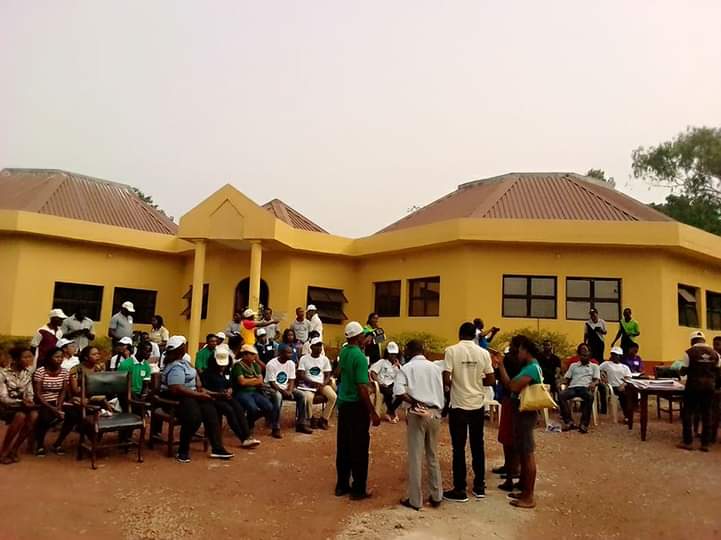
HRCRC, in collaboration with the National Human Rights Commission NHRC, and other CSOs in Abakaliki – such as Child Protection Network, Human Rights Defenders, Neighborhood and Environmental Watch Foundation, the National Girls Guild, amongst others, – embarked on a week-long campaign and protest against Rape and all other forms of Sexual and Gender Based Violence (SGBV).

The campaign which was kicked off with a roadwork around Abakaliki metropolis; and subsequently the protest was taken to the Wife of the Governor, the Commissioner for Information, the Commissioner of Police, the Chief Justice and Judiciary, the Attorney General and Commissioner for Justice, CAN, the Islamic Community, the State Legislature, amongst others.

Now the campaign is over, the work starts.