Child Abuse and Neglect Due to COVID-19 Lockdown

Despite the partial lockdown, HRCRC was besieged within the last month with a medley of matters that mostly resolved around domestic violence and gender abuse, child abuse and even trafficking amidst others. Women and Children are worst hit as they suffer the brunt of the frustration in society due to the pandemic and the plethora of the attendant effects…
Pictured here is Gift (15), who is here in Abakaliki, working in a restaurant to raise money to eat. She has no knowledge of her home town, or her parents names or dates and times of her sojorn to her present life.
Through investigation, HRCRC has contacted her elder sister, who will come to identify and will lead HRCRC to her parents after the lockdown. After consultations with security agencies, she currently lives with a good Nigerian who volunteered to, whilst HRCRC monitors her welfare.

Gift (15)

Also, a One year old baby consistently abandoned by his mother for one day or more in many instances to either go to the market to sell, or travel to buy goods…
Whilst we acknowledge the economic reality of Nigeria and Ebonyi State that may warrant this single mother to try to legitimately earn income to cater for her needs and that of her child, HRCRC cannot and will not stand for any form of child abuse: especially in the subtle almost acceptable form of NEGLECT….

HRCRC Facilitates the Release of over 20 inmates of Abakaliki and Afikpo Prisons in Goal Delivery by CJ of Ebonyi State

Every person charged for committing an offence is entitled to be arraigned and tried before a competent court of law within 48 hours. However, certain alleged offenders have been remanded in prison for over two years without trial.

The Chief judge in his magnanimity, backed up by statutory provisions, discharged alleged offenders awaiting trial in a goal delivery exercise. Over 50 persons awaiting trial were discharged

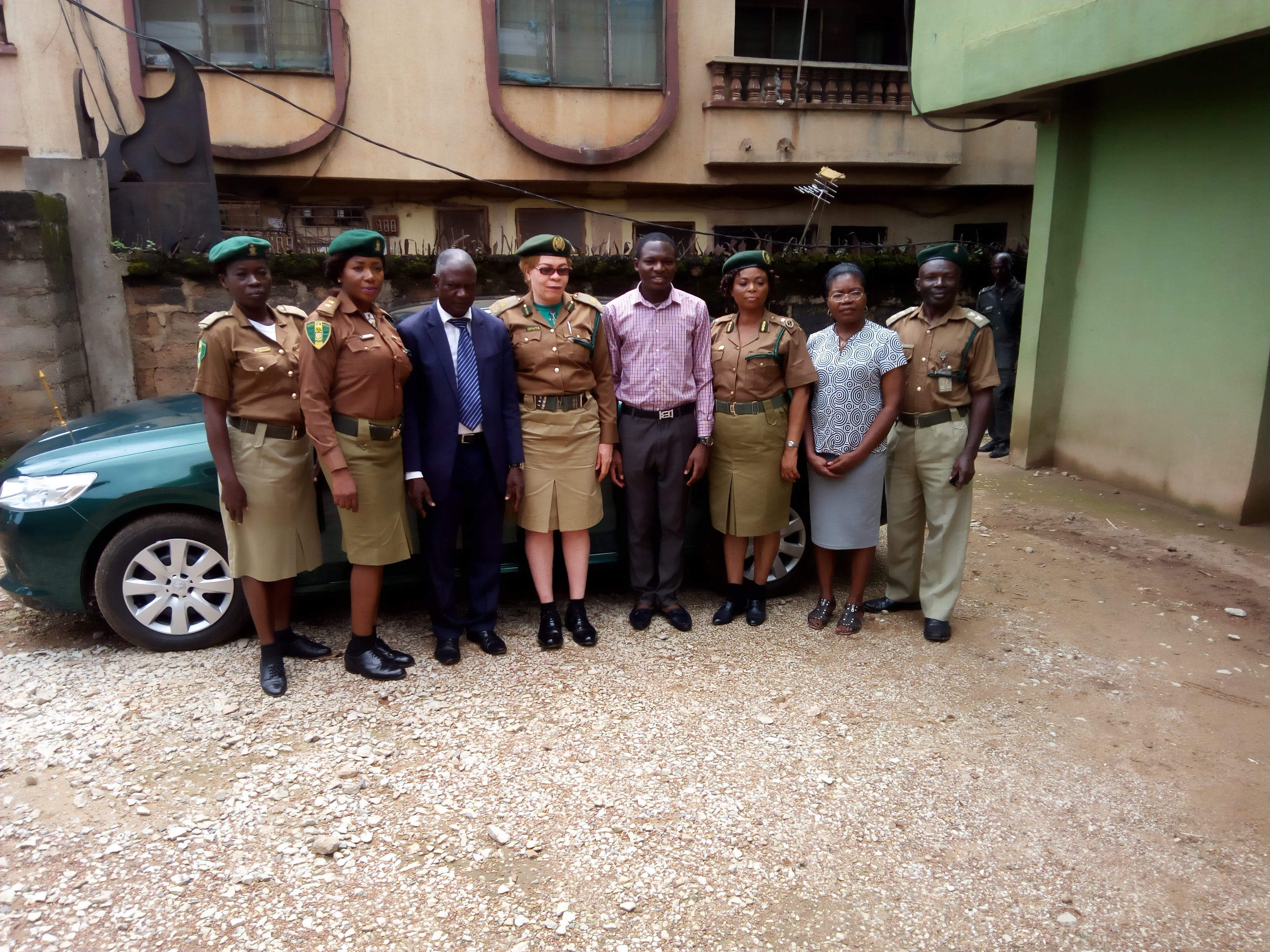
HRCRC is happy to be part of this exercised, facilitating the release of a number of alleged offenders, spare headed by the lawyers in the department of Access to Justice.

Human Rights Died on Sunday

Once upon a time we would rush out at the sound of human click sounds – imitating the very fascinating Zulu ‘X’ sound –  and the accompanying moo. It was interesting to watch how little petite very handsome curly haired Fulani boys controlled these gigantic white sluggish mammals with horns; Ah Yes, the horns! That they valued the life of the animals under their charge didn’t really stir up debates. Instead we were impressed with their smooth carved crosiers; along with the little daggers they wore around their waists like Navy Seals in full combat gear. Also, very inspiring was idea that these little dark handsome curly-haired bundles of calm confronted wild beasts in the wild regularly with their daggers to protect their mammalian wards.

I suppose the wild beasts in the wild grew more ferocious for soon, during the harmattan when the human click sounds accompanied by the moo passed by, in the stead of daggers we saw machetes not on their waists but held on their hands seemingly nonchalantly but at a ready. Then we heard on the news that they now carried riffles to protect themselves and their charge from the ever-evolving dangers of the wild. Logically following this projection, soon they may need RPGs and grenades and the likes and, in a few years, when the issue of Nigeria comes up at the UN General Assembly, President Trump and Kim of North Korea will have to shut up because their quarrel will be petite in comparison.

Collectively, from the developing world of Europe and North America to the underdeveloped of South America, some of the far and middle east and indeed Africa, we have all managed to make a pleasant mockery of the Universal Declaration of Human Rights. All other inalienable right every human is entitled to just by being alive is pinged on the right to life. To pull off the hinge is to render quite redundant the door functionality of a door. If only humans beings who are alive are referred to as humans – dead ones are referred to as bodies or corpse -, and If every other right of a human is only valid because that human is alive, It therefore logically follows that by the wanton disregard and disrespect for the dignity of human life, so passionately and fantastically exhibited throughout the world today, we all have passively and actively destroyed the hinge on which all other rights revolve.

Ironically, while this rubbishing of all Human Rights in other climes have some sort of not justifiable in any sense but at least dignified push behind it, Nigeria chose to align herself with the less dignified kind of genocidal tendency; –  the ones that have an undertone reference to animals. Nigeria is proudly in the company of the likes of the Rwandan genocide – with their Cockroaches reference; but since we are the giant of Africa, why not choose a more gigantic animal – say Cows? Just why not? As if that is not enough disgrace, families and boarder communities continue to deprive people of their right to life in Ebonyi state over land disputes and sundry matters, the Izzis and Ukelles are killing themselves over something that happened before they were born; then kidnappers, cultists, ritualists, careless officers of the law, robbers – both armed and not, mob action/jungle justice and herdsmen graciously join in compounding the situation for us.

It was remarkable to read a leader make subtle comparison between the life of cattle and the life of a human being. The Miyetti Allah Cattle Breeders’ Association of Nigeria was alleged to have elusively said that the murder of more than a hundred innocent persons in Plateau State was a reprisal attack for cattle rustling in the town and even threatened –  sorry, cautioned that there would be no peace in the area because of this great crime against humanity – cattle rustling. Instinctually, my first reaction was with great deference to his fundamental human right to speech and opinion, how dare he make a subtle defence of the inhumane murder of human beings right in their houses and compare it to the killing and rustling of cows, and even daring to justify his stance by saying there will be no peace. And I am sure many other southern Nigerians shared similar or even less agreeable sentiments. Eventually, this news was found to be inaccurate. The sudden proliferation of hate speeches and fake news mostly born out of stereotypes and prejudices is both unhealthy and a catalyst for disintegration and possibly annihilation. But this is an issue for another day. Today’s issue is that just like clockwork, Nigeria reacted. And this is what I have a problem with.

Whilst we moan, whimper, sniff and scream about the evolving tactics of protection employed by these curly haired shepherds, why is the government and security agencies tasked with the simple duty of protecting and securing lives of Nigerian Humans, not livestock, not learning from their positive cum negative – depending on your perspective – flux of protection? Or is that asking for too much from agencies whose sole task is securing our lives?  Why can’t we learn to value human life like they value cow life? The curly-haired handsome fellows are being proactive while the rest of us – citizens, security agencies and indeed the political class/elected government are impressively reactive.

Soon after the news of the mass killing broke, the federal government as usual condemned the attack and as usual promised to bring the perpetrators to justice, and as usual promised to prevent a recurrence, members of the ruling and political class issued statements condemning the attack, the Nigerian Air Force deployed a Mi-35P combat helicopter and an Intelligence Surveillance and Reconnaissance (ISR) aircraft to Plateau State, the Commissioner of Police was replaced, and of course social activists protested and were as usual harassed by security agents. The impressive list of reactions goes on and on and on and all combined does absolutely nothing to comfort the grieving in Plateau State, resurrect those potentials cut short who just happened to be on the wrong end of a bullet or a machete, or even from experience prevent a recurrence. In fact, a week after the initial attacks, and all the reactions and follow-up politicising of the event, it was reported that another attack, with the same MO, in the same State, and by the same suspected handsome curly-haired fellows killed Human Rights again. And in a swift reaction, the Chief Executive of the Plateau State adjusted the already imposed curfew from 10pm – 6am to 6pm – 6am.

Human Rights are not passive, they are active. They are neither good nor bad, they just are. They are beyond the scope of morals or ethics or religion or I dare say even human judgement. Since their conferment is not reactive or a result of any human effort or dependent on any human factor, it is safe to aver that the drive to safeguard them be commensurate. Like the developing world, think-tanks and intelligence agencies should come up with -if they do not have already- operational preventive plans and measures for all foreseeable conflicts and attacks that are proactive; and if they cannot, they should bloody well say so, so that we can task persons both within and without our social entity to do so.

We cannot continue to wait for attacks to claim innocent lives and then go on a show of force to quell reprisal attacks or prevent the emotionally wounded to express their natural emotional frustration and revenge tendency. The hurt will result in a vicious circle of attacks and counter attacks that can breed hate and, well it just goes downhill from there. While the hypocrisy of persons, especially Christians rejoicing over reprisal attacks is glaring, it is also emotionally understandable but out rightly condemned. The murder of Zayyan Gwandu, son of the Commissioner of SARS – Haliru Gwandu Abubakar for example is not only crazy but also senseless and irrational; and would remain this way until someone convinces me that he was among the group of first attackers. And even after then, it would be illegal to deprive him of his right to life haphazardly without due recourse to legal procedure. One can understand the lack of faith in the security and legal system in Nigeria as one of the major reasons why mob action and unjust jungle justice is prevalent.

Also, professional conflict resolution experts should be employed to help intervene in these cases and their recommendations be implemented.
Essential Attributes of HRs: (1) UNIVERSALITY

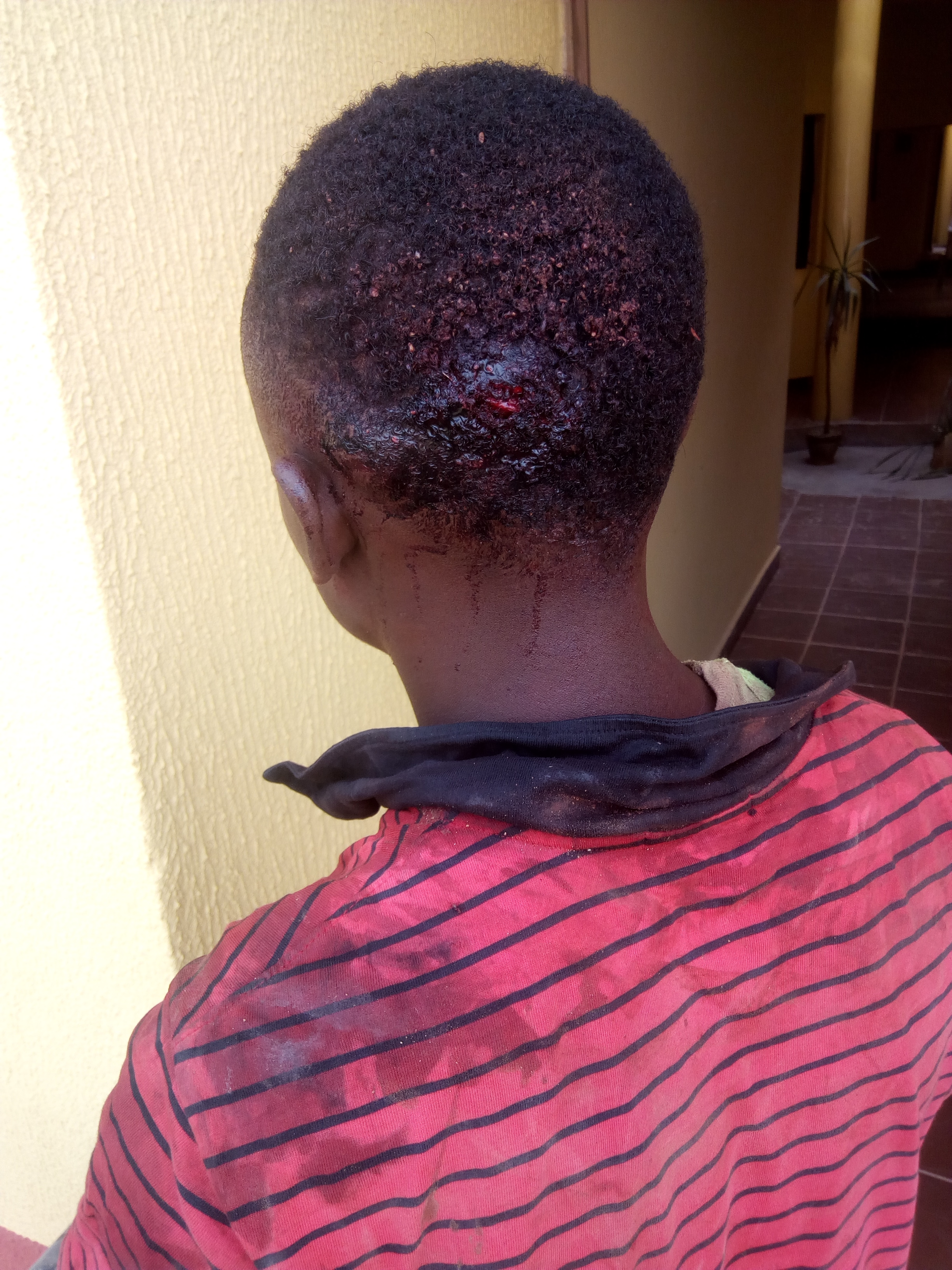
Earlier this year, a young boy ran to our office crying for help. He was physically distressed and had a deep and fresh wound on the back of his head. The boy’s face and shirt were terribly stained all over by blood. He told us, his father inflicted the head-injury on him, and that it was not the first nor the second time he had suffered similar fate from his father. A team of HRCRC staff followed the boy to his parents’ home for fact-finding mission. It was discovered that his father had inflated the injury on him because of his ‘stubbornness’. When the father was found and questioned as to why he had to beat his child to that extent, he bluntly said: “na you go teach me how I de take raise my children? Na my child e be na. Ah! I can do whatever I want na. Forget tha’una human right thing. Na oyibo matter o. Here na Naija abeg”.

Like the father of the boy referred to above, many believe that the entirety or some aspects of human rights (HRs) claims are not applicable to some persons (sometimes, because of the location, race, gender, culture, religion, profession, and other accidental attributes of such persons). Others (especially in Africa) even hold it that the notion of HRs is alien to them. To these persons, gender equality, social equity, child rights, fair wage, and other issues on the fore front of international struggles to improve human conditions are simply noises from individuals who are probably seeking attention and sympathy.

The assumptions alluded to above are misconceived, and it is what #KnowYourRights post this week wants to address. Rights due to A because A is a human person should not be denied to B if B is a human person. This is simple logic, and it is the basis of the universality of rights. If you were to find “the lowest common factor” between a child living in America, an adult woman in Asia, and an adult man in Africa, you cannot avoid the conclusion that they are all human beings. Our common humanity demands that we all share in equal dignity. Hence, the forms in which our humanity manifest (that we are black, male, female, pastor, son, wife, physically challenged, from the east or west, a Christian or Muslim, etc) is inconsequential to the obligation we all owe each other. It is that we are to respect human dignity wherever the human being exists.

If you consider the foregoing and relate it to our story, the boy’s father cannot absolve himself from gross failure to treat his child with human dignity by subjecting the latter to torture. His being a Nigerian (as if Nigerian laws permit that parents can do anything to their children) is immaterial to the demand of fairness in this case. In fact, Child Rights Act (2003), a federal instrument of law which has been domesticated in many states of Nigeria (including Ebonyi) expressly criminalises torture and other maltreatment of children. Also note that the law does not care whether such children are yours biologically or by other means (including acquisition for help or fostering).

In the case of care for children, the wise sayings of Nelson Mandela, the first democratically elected President of South Africa, is apt for consideration. Mandela once said: “We owe our CHILDREN the most vulnerable citizens in any society – a life free from VIOLENCE AND FEAR.” Whether a child is in Umuezekeoha in Ezza North LGA of Ebonyi State, or in New York City, the child deserves special care for the reason that (1) their dignity is the same, and (2), “Children [everywhere] are our most valuable resource” (Herbert Hoover).

To conclude thus, it should be noted that HRs are not some discretionary privileges that may be enjoyed by some and not all human beings (take home point for this week’s #KnowYourRights post). To drive home the strength of this assertion, Barbara de Mori (2002) succinctly puts it that HRs exist “independently of recognition or implementation in the customs or legal systems of particular countries”. In other words, the universality of HRS is such that cultural or other idiosyncratic claims about certain HRs tenets does not hold in reference to claims concerning HRs values.

Contributors: C. O. Ikegbunam Esq.
C. A. Nwankwo Esq.
D. A. Okoliko

The young boy with his wounded head

Disclaimer:
This is a free educational material and not a source of legal advice. If you need any, please consult your lawyer.

Access to Justice Is One of Our Core Drives

By Barr. Jude Ogbunkwu

The collection of activities that is termed as Access to Justice programme at Human Rights and Conflict Resolution Centre (HRCRC) in Abakaliki constitute the foremost works that the organization do right from its inception. They include prison/police cell welfare, facilitation of Gaol delivery, pro bono legal services, and general legal services for the less privilege. At the time, the organisation was nursed in late 1980s, Fr. Kevin O’Hara (SPS), was the Parish Priest of Corpus Christi Parish Umuhuali where he witnessed an unlawful detention of one of his parishioners, one Peter Nwekeoga. In attempt to intervene to see to the release of Peter, he discovered the unspeakable and terrible state of prisoners and the prison service in the town. He immediately felt moved to do something; it was this that opened door to series of interventions targeting ameliorating the conditions of lives in the prison which became a drive for the formation of an organisation that aimed at advancing justice for all, especially the most vulnerable ones in the society.

In the different phases of the organisation, firstly Human Rights Commission (HRC), then Institute for the Enhancement of Human Dignity (I.E.D), HRC again, and then HRCRC, the organisation has kept Access to Justice as a core programme in the Centre. The programme offers free legal services to victims of Human Rights Abuses. The Centre is grateful for the support it has enjoyed from partners to carry out its functions of widening the scope of justice for the vulnerable of our community. Some of these partners who have supported us in the past include Misseror, Manos UNIDA, Cordaid, Catholic Reliefs Services, St. Patricks’ Society, Irish Aids and Misean Cara being the last sponsor of our project titled: “Enhancing the Child Rights in Ebonyi State” which lasted between 2015 and 2017.

Access to Justice department of HRCRC has helped many people who left to circumstances of odds in our nation’s justice system are greatly disadvantaged to access fairer treatment in legal struggles. HRCRC team at the department offer legal advices, prepare legal documents and interventions and represent individuals in court; that is, those who are disenfranchised by the justice system so that they can have fair hearing and have their noble rights respected. During the course of the project, “Enhancing the Rights of the Child in Ebonyi State” (lasted from Jan. 2016 to March 2017), a total of 130 persons who were unfairly detained in prisons and police cells were released through the effort of the department.

Most of the beneficiaries of our interventions are the poor who can hardly afford the high cost of accessing justice in the Nigerian context. Consider Mrs. Blessing Okechukwu for instance. She was a pregnant and nursing mother who was charged for stealing cocoa yam worth of four hundred naira (N400) from a local market in her small community. Upon her arrest, she was remanded in prison custody at the Nigerian Prison in Abakaliki alongside her little baby for six months without trial. When she was discovered during our routine checks and monitoring of prisons across the state, our legal team took up the matter before a magistrate who upon hearing struck out the case for lack of diligent prosecution of the matter by the complainant. One of the motivations for our intervention has to do with her little child who had to suffer untold hardship for no fault of his.

Inability of persons going through legal struggles to afford ‘cost of justice’ in Nigeria is a contributing factor to prison congestions in Nigeria. Justice is quite expensive in our society. You only have to consider what it takes to get records of proceedings on any case or information, to file motion for appeal or bail and the several journeys to the court of arraignment or trial that a lawyer have to make, and you may excuse legal fees that lawyers charge. This is not to speak of sharp practices by some lawyers and other elements within the justice system. Here at HRCRC, we are committed to serving the interests of justice so that more people can lead happier lives.