

The Presumption of Innocence vs The Presumption of Guilt; The Nigerian Bail Story.

In Nigeria, every person (including suspects and defendants/accused persons) is assumed to be innocent until a court declares a person guilty. This is a constitutional right that should not be violated by any person (including law enforcement agencies, institutions, leaders and government). However, the reverse is the case, with overzealous law enforcement agencies, going in the circles of; abuse, arrest, abuse, detain and abuse again before taking the suspect to court (if the suspect is fortunate to be arraigned). In Nigeria, “Bail” is mostly seen in law books and movies, since many suspects are detained without bail for weeks in all parts of Nigeria and lawyers get beaten up for seeking bail for clients. This work reveals the quickest means of obtaining bail after 24 hours of arrest in any part of Nigeria.

There is a big gap between criminal law and human rights as contained in our law books and as applied in reality. There are three groups of law enforcement agents in Nigeria; the first group understands the law and applies it thoroughly, the second group understands the law but will not apply it due to corruption, nepotism and fear while the third group does not understand the law and does not care. Unfortunately, the last group seems to be dominating followed by the second group, as such human rights suppressed. Among the concerned human rights are; right to life, right to dignity of human person, right to personal liberty, right to fair hearing and right to freedom of movement.


The essence of bail is to enable a suspect to go home and about his affairs while ensuring the suspect will at a later date, appear in a given place (like the office of a law enforcement agency or in court for investigation or to answer to his case). Bail is not a privilege or favour done to a suspect rather a right of a suspect. Remember that a suspect is not guilty so he/she should not suffer or be treated as if he is guilty. Consequently, a suspect that is detained for an offence not punishable with death (non-capital offences) is entitled to bail within 24 hours of being arrested.

The police (any law enforcement agency) time for detaining a suspect arrested for an offence that is not to be punished with death (non-capital offences) is 24 hours. Time starts counting from the moment a person is arrested, ceased or appears to answers an invitation of a law enforcement agency (whatever the language/term, so far as a person is no longer free). So, once a suspect is arrested, the law enforcement agency must ensure that its further investigation, bio-data capturing, granting of bail and seeking for advice, approval and any indoor management/protocol is completed within 24 hours. Where a suspect is detained beyond 24 hours for an offence that is not punishable with death, the suspect can be granted bail by a court having jurisdiction over the offence.

In Nigeria, a detained person may not be allowed to approach a court to seek his own bail or to even access a lawyer of his/her choice, by overzealous law enforcement agents working on ignorance or corruption. Hence, where a suspect is not granted bail by a law enforcement agency within 24 hours over a non-capital offence, any person can go to court and institute a case against the concerned law enforcement agency (and its agents) on behalf of the suspect. The court will order the suspect to be produced (brought to) court and inquire into the circumstances of the detention. Where the court desires, the court will grant bail to the suspect. The required application for bail in court, can be written or oral, even if the court is a superior court (High Court/Federal High Court/National Industrial Court).

It is better to engage a lawyer to assist with bail application in court. Bail is a right and not a favour. Bail is free because it is a constitutional and fundamental human right, provided freely by the Constitution of Nigeria. Report any law enforcement agent, court staff, magistrate, judge or legal practitioner that request for money/gift in order to grant bail. However, a legal practitioner is entitled to charge for his legal services but no to charge any fee to be paid as bribe or gift for bail.

My authorities are:

1. Sections 32, 161, 162, 163, 164, 494 and 495 of the Administration of Criminal Justice Act 2015 and its equivalent in states across Nigeria.
2. Sections 34, 35, 36, 230, 237, 249, 255, 260, 265, 318 and 319 of the Constitution of the Federal Republic of Nigeria 1999.
3. Judgment of the Supreme Court of Nigeria (on the nature and effect of Bail) in the case of SULEMAN & ANOR v. COP PLATEAU STATE (2008) LPELR-3126(SC)
4. Judgement of the Supreme Court of Nigeria (on bail) in the case of UGWU v. STATE (2020) LPELR-49375(SC)
5. Judgement of the Court of Appeal (that every person is presumed innocent) in the case of ALAYA v. STATE (2007) LPELR-8841(CA) citing Eyu v. The State (1988) 2 NWLR (Pt.78) 602 at 610, Abiola v. FR.N. (1995) 7 NWLR (Pt.405) 1 at 155
6. Judgment of the Court of Appeal (on whether bail can be granted in non-capital offences) in the case of OGEDE v. FRN (2018) LPELR-46816(CA)
7. Judgment of the Court of Appeal (on whether bail can be granted in capital offences) in the case of OGEDE v. FRN (2018) LPELR-46816(CA)
8. Judgment of the Court of Appeal (that oral bail application can be made in any court, including courts of record) in the case of Chief Alhaji Moshood Kashimawo Abiola V. Federal Republic of Nigeria (1995) NWRL PART 370 P.155.
9. James Ezeh, “Nigerian Lawyer Hospitalised after Police Assault, NBA Demands Justice” (Premuim Times, 13 October 2019) 1 September 2020.

© thenigerianlawyer.com
7/10/2020

HRCRC and other rights groups confronts Primitive form of punishment and rights abuse in Ebonyi State

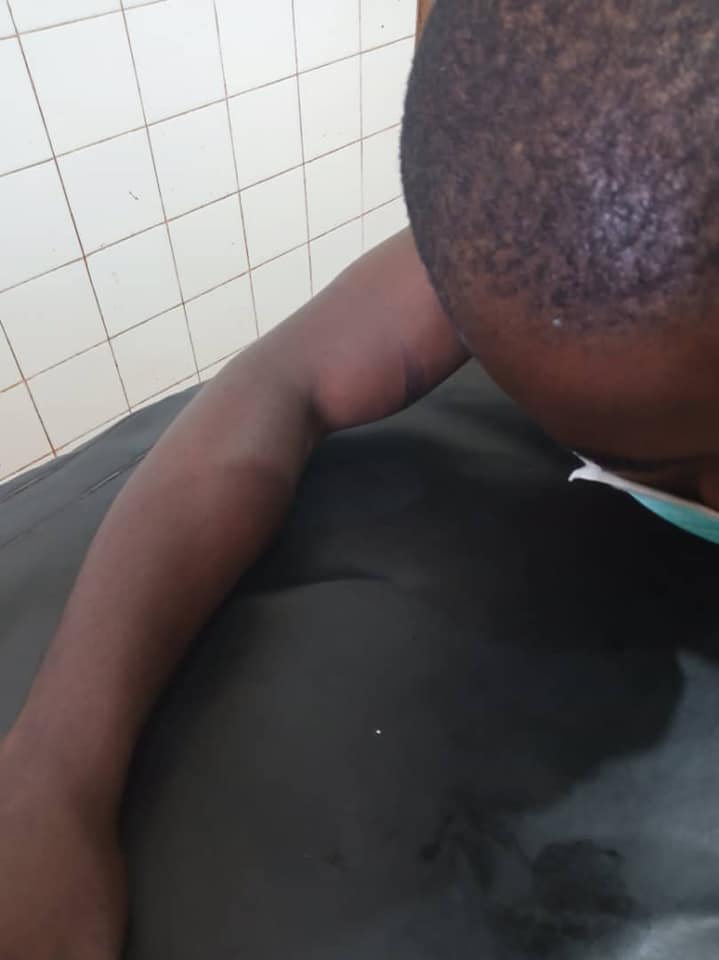
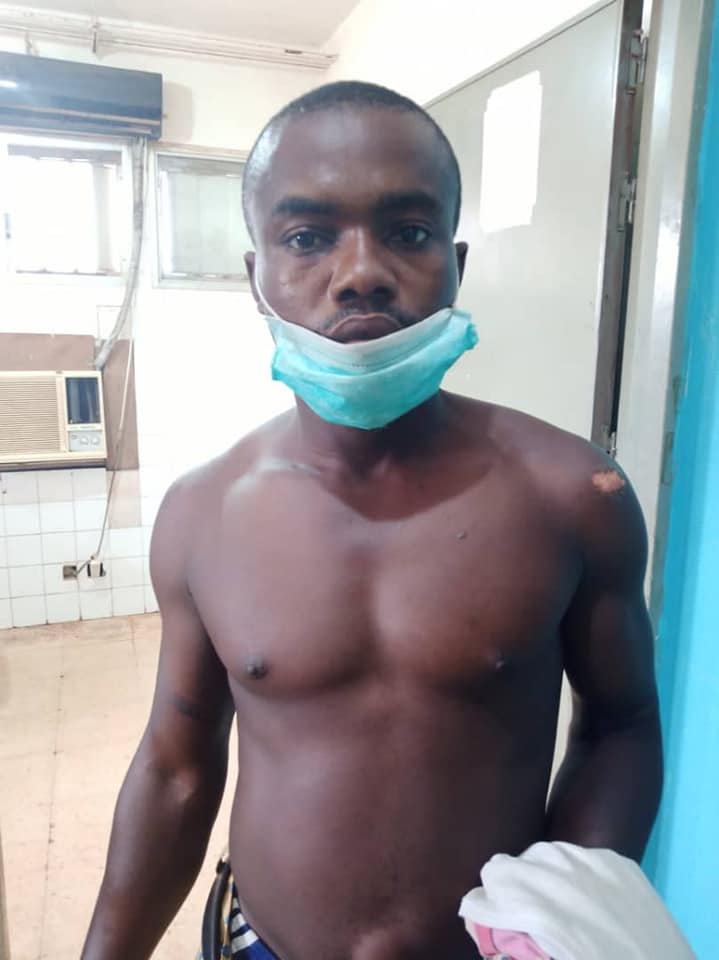
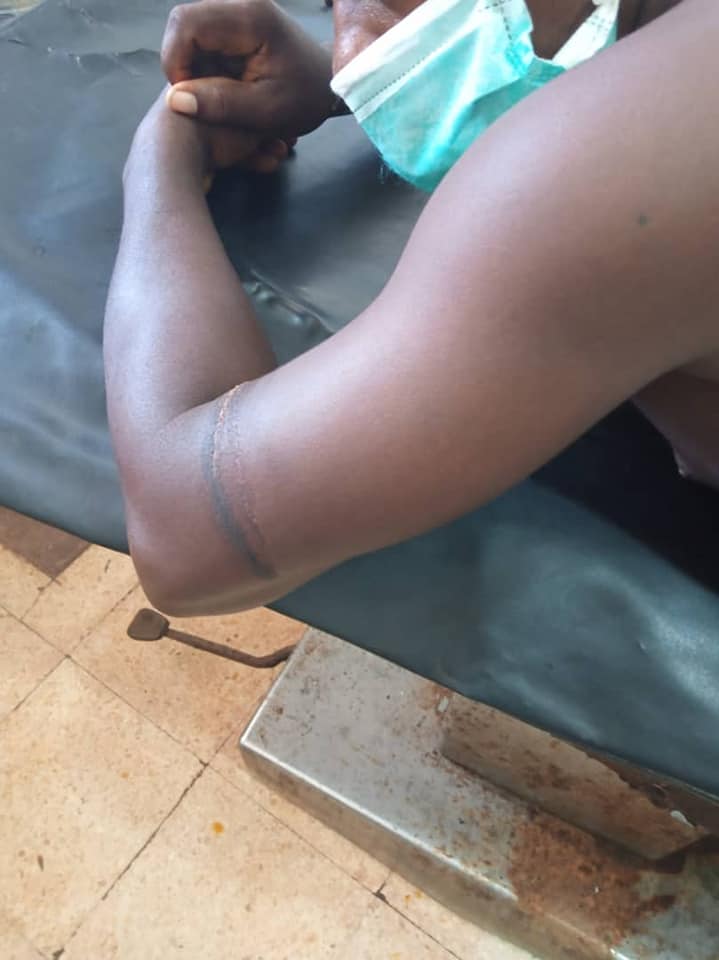
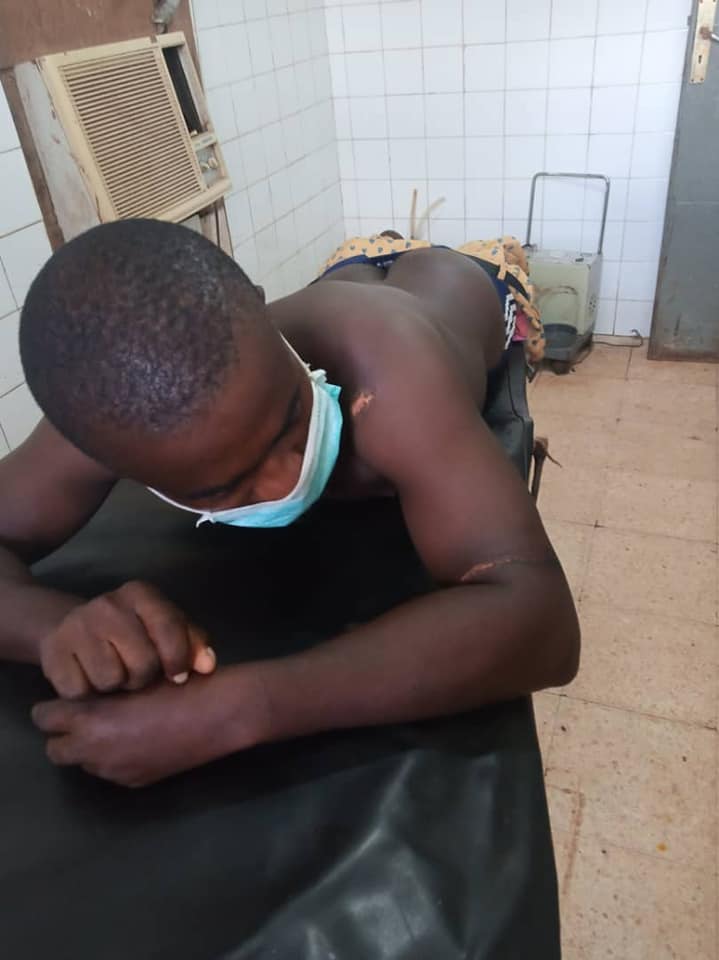
Pastor Okochi Chukwu Obeni, the latest victim of jungle justice and primitive punishment – as well as intimidation by the political class in Ebonyi state. He is from Ohaechara Eziome Okochi, Amasiri community, Afikpo North LGA of Ebonyi State. Two days ago, following a Facebook post he made, perceived to be distasteful to the chairman of Afikpo North LGA, Hon. Oko Enyim; a TA to the governor, Hon Amadi Julius Nyerere and a supposed Isi Oru Community leader, Abidi, Amicable Ikechukwu boldly led a group of boys who abducted him, tied him up at first and ordered him to face the sun for over an hour which almost left him blind.

After that, they bundled him like a common criminal, threw him into a dirty gutter and allowed him to swim for 30 minutes. After which they ordered him to crawl out of the gutter before they began to lash him with a cane. Each of the boys was charged to give him 10 strokes of the cane. According to the victim, he had received a total of 35 strokes on his buttocks before he was bailed out the remaining strokes of cane were bought off with money.

Visit HRCRC Facebook Page – HRCRC. Abakaliki for a video of the torture he endured or click on the link https://web.facebook.com/oti.abali/videos/3542194455796429/UzpfSTI0MjY0NTU0MjkyMjU0NDo4NzQwMjc0MTY0NTEwMTc/

Torture and jungle justice in Amasiri, Ebonyi State

HRCRC, in conjuction with HURIDE visited Afikpo to see the wounded Pastor Okochi and we discovered that he has not been able to use his hands on anything and can’t even sit on his buttocks since after the attack. He has been taken him to the Federal Teaching hospital, Abakaliki where he is currently receiving treatment; whilst legal actions have commenced.

Child Abuse and Neglect Due to COVID-19 Lockdown

Despite the partial lockdown, HRCRC was besieged within the last month with a medley of matters that mostly resolved around domestic violence and gender abuse, child abuse and even trafficking amidst others. Women and Children are worst hit as they suffer the brunt of the frustration in society due to the pandemic and the plethora of the attendant effects…
Pictured here is Gift (15), who is here in Abakaliki, working in a restaurant to raise money to eat. She has no knowledge of her home town, or her parents names or dates and times of her sojorn to her present life.
Through investigation, HRCRC has contacted her elder sister, who will come to identify and will lead HRCRC to her parents after the lockdown. After consultations with security agencies, she currently lives with a good Nigerian who volunteered to, whilst HRCRC monitors her welfare.

Gift (15)

Also, a One year old baby consistently abandoned by his mother for one day or more in many instances to either go to the market to sell, or travel to buy goods…
Whilst we acknowledge the economic reality of Nigeria and Ebonyi State that may warrant this single mother to try to legitimately earn income to cater for her needs and that of her child, HRCRC cannot and will not stand for any form of child abuse: especially in the subtle almost acceptable form of NEGLECT….

THE UNJUST JUSTICE SYSTEM – by Gana Samuel Stephen

In Nigeria, wrongful convictions often pass through our judicial system undetected for some time, and at an alarming rate that the walls of our prisons are beyond what will be considered as overcrowded. Why this doesn’t plague the minds of individuals within the system is a mystery almost at par with the trinity.  Remarkably, society is seemingly comfortable with the erroneous truth that everyone within the walls of the prison deserve to be there Are there obstacles at all within the system itself that contributes to these problems? Is the culture of keeping suspects on awaiting trial the standard of practice? Are they actually rooted in a skewed interpretation of the law, or the law works more on paper? Does the system really give succor to indignant suspects? And if it does, how do victims seek relief in a judicial system that moves on a slow pace? Is there a political will to do justice? Certainly we cannot overlook these questions and neither can we be silent to the fact that with each passing day, the Nigerian system seems to work opposite to what our laws clearly provide.

At the policing level, which is the first active limb of the criminal justice system, there is overwhelming evidence showing that the police in carrying their basic duties compromise and practice far below global best practices. It is a common police procedure and in fact the standard for people to be randomly arrested and accused of grievous crimes as serious as murder, in the expectation that a case will be built around such arrest that is – working towards the answer – rather than via any scientific approach towards investigation of crime and regard to the rights of the accused person. This process is accompanied at most times with intimidation and show of force by police officers; it is in fact a norm that suspects are brutalized from the point of arrest and even in police custody.

 A male inmate who had been tortured in police custody said, “The police used rubber to tie my hands and arms. They said I had committed robbery.” His palms were blistered and peeling and his arms were crisscrossed with dark lines as a result of the wounds. His left hand hung limp. He was not treated for his injuries. Many inmates who have been in police custody get to court with injuries and wounds they got from arrest.  

The ultimate goal of this practice is to extract confessions of guilt from suspects by any means including the severest forms of torture as well as inhumane and degrading treatment. It is common practice for the police to hold accused persons under the nebulous principle called a “Holden charge,” with a view towards circumventing the person’s constitutional right not to be held for an unreasonable length of time, or be charged within a reasonable time as stipulated by the constitution. It is common place for accused persons to be kept in police detention well beyond the statutory 24 hour maximum within which they should be informed of the facts and grounds for their arrest, and indeed charged to court within 48 hours of arrest as guaranteed by Section 35(3) of the 1999 constitution.

Although bail is considered to be the right of an accused person, and as such advertised as free, police bail for the simplest of crimes carry with it a token of appreciation for a job well done, and even at that,  it is normal practice to deny bail even for petty crimes. This practice is commonly referred to as “police bail.” This happens most a times without services of a lawyer at this preliminary stage of the process when they require legal advise the most, as suspects are been forced to sign confessional statements or even tricked into admitting to commit a crime they know nothing about.

At this stage where a criminal matter is at its preliminary stages, a strong foundation of human rights abuses is prevalent. It is in fact where the suspects begin to contemplate the possibility that he actually committed the said offence.

 Next is the arraignment, where a police officer charge the already defeated suspect to a magistrate court who in most cases lack jurisdiction to entertain the matter so, the suspect is remanded in prison custody pending the advice of Director of Public Prosecution (DPP); another process which expends time, or even culminate in charging the suspect for a higher offence than the one committed. An inmate in Abakaliki prison during an interview with HRCRC said, “Me and my cousin [sic] stole a motorcycle to sell and pay SARS operatives who arrested my brother but we were caught before we sold the motorcycle. The owner said he does not want the case to go far but the police insisted we both pay twenty thousand naira for our bail or they forward the matter. My cousin was able to raise the money but I could not. On our first day in court, the magistrate granted him bail which he perfected and I was remanded in prison and this is two years since I last had my case in court”. After further investigation, HRCRC discovered that the said cousin who happens to be a co-accused was actually charged before the magistrate for stealing which is bailable while the other was charged for armed robbery on which the magistrate lacks jurisdiction hence his long stay – awaiting advice from DPP. 

 From the moment the suspect enters the walls of the prisons; his case is a forgotten issue, a term the criminal justice system termed as “Holden charge,” and which our courts described as alien to our laws but still a norm utterly practiced. Statistics obtained from the two Federal Prisons in Ebonyi State suggest that awaiting trial inmates held under this nebulous practice of Holden charge constitute a large number on the list. Such is the case of Chukwudi mentioned above. He lamented that all he wanted was just his day in court. –  “I just want to go to court let those who accuse me come forward and prove their allegations.” Chukwudi had been on Holden charge for over four years until HRCRC facilitated his release through Gaol Delivery in June of 2019.

Cases like these tainted with different types of Human Rights abuses get to courts from the police, only to meet a judicial system which in all fairness contributes amply to these abuses. Judicial officers write in long hand. Sometime they don’t sit on time or at all may be as a result of personal exigencies. The prosecution of criminal cases in the Magistrate Courts is done mostly by police officers. Most of the time, they don‘t have their witnesses in court and as such will ask for adjournment. In such cases they need advice from the Director of Public Prosecution, it may take months or even years to obtain because of the bureaucratic bottleneck in the administration of justice and general administration in Nigeria. 

The case of Sunday (23), an inmate illustrates the situation of many awaiting trials: He was first brought before a magistrate on 6 December 2010. He was at that time fourteen years old, a minor, and arrested on suspicion of armed robbery. The magistrate did not have the jurisdiction to handle his case and remanded him in prison, pending the police investigation. When his case was transferred to the High Court, he had two different judges assigned to his case an on each occasion, both started de novo – from the beginning.  At the time of HRCRC visit, eight years and two months had passed and he is on still awaiting trial. Sunday, who is now 23 said; “I have no lawyer and none was offered me either.” He denies that he had anything to do with the murder case. According to him, “There was a fight in my village between two gangs and one gang member was killed. Two days later, the police came and arrested me and eleven other persons.”

The Paucity of Legal Representation and the near absence of Pro-Bono Services have further worsened these abuses. In Nigeria, over 70 percent of accused persons are indigent and therefore unable to secure legal representation. To combat this problem, the government established Legal Aid Council, but the program is financially handicapped. In most cases, the accused person’s first real contact with a lawyer comes when they are charged before a magistrate after being remanded into custody, which is euphemistically referred to as an “overnight case.” This is clearly at variance with the requirements of the Nigerian constitution.

Suspects in Nigeria are systematically denied a range of human rights. Stakeholders throughout the Nigerian criminal justice system are culpable for maintaining this situation. This anchored around the inefficient machinery of the administration of justice, and hinges largely on how the police go about their duties usually in violation of the laws they are meant to protect. The judiciary in turn fails to ensure that all inmates are tried within reasonable time and then the prisons cannot ensure that facilities are adequate for the health and well-being of the prisoners. Severe overcrowding and lack of funds have created a deplorable situation in Nigeria’s prisons

Because the majority of wrongfully convicted persons or persons who suffer human rights abuses are indignant people, and huge legal fees and barrister’s fee note to contend with, it falls on the NGOs to take on the task. With funding as a major constraint, HRCRC did the little it could, with regular visits to police stations, prisons and the remand home, to review cases of indignant people facing human right abuses by authorities meant to uphold these rights. This resulted in the release of over 30 inmates on Holden charge, free legal representation for indignant victims of Human Rights abuses, and reintegration for the released inmates.

Much needs to be done. There are a lot of things we cannot undo, but to allow the innocent and indignant suffer Human Rights abuses is one thing that can be undone and HRCRC is taking the charge.  

ARE WE READY FOR HUMAN RIGHTS? – by Precious R. Nwadike ESQ

Years ago, people came together and agreed on the essentials of a civilized nation and what it would take for us not to constantly descend to barbarism. The United Nations Declaration on Human Rights 1948, the African (Banjul) Charter on Human and Peoples Right 1981, which has been ratified by member states and codified in chapter IV of the 1999 constitution of Nigeria are products of our brave attempts not to become barbaric. These rights act as that shield which protects us simply because we are humans and alive, not because we are inherently good people, rich, law abiding tax payers, male or female. Some of these rights include: the right to life, the right to dignity of human person, the right to personal liberty, the right to fair hearing etc.

Human rights are moral principles or norms that describe certain standards of human behaviour and are regularly protected as natural and legal rights in municipal and international law. They are commonly understood as inalienable, fundamental rights “to which a person is inherently entitled simply because she or he is a human being regardless of their nation, location, language, religion, ethnic origin or any other status. They are applicable everywhere and at every time in the sense of being universal, and they are egalitarian in the sense of being the same for everyone. They are regarded as requiring empathy and the rule of law and imposing an obligation on persons to respect the human rights of others.

These rights are therefore very sacrosanct. However, we have not actually lived in the reality of these rights. In some parts of the world they are yet to be realized, and in other parts of the world like Nigeria and other developing nations, these rights are currently under attack. Recently, the Governor of a South-eastern state, in a closed door meeting with Human Rights agencies and other stake holders said that there was nothing like human rights. Even if there was, we are not ready for it as a nation.

News of security operatives and law enforcement agencies who bully citizens and capitalize on their ignorance to extort from them is not a rarity anymore. Arresting a person for being in possession of a laptop without the receipt and charging him for armed robbery; arraigning an accused person before a court that obviously lacks jurisdiction, leading to his further remand in prison until his case is filed at the appropriate court; rounding up any young person found within a 200 meter radius of a crime scene and charging them for the offence of cultism – a non-bailable offence in Ebonyi state – which implies that they are remanded and forgotten to rot in prison as awaiting trial inmates; are almost conventional in the Nigerian society today.

The deplorably slow pace of our justice system has become a clog in the wheel of justice. This has made many assume that these rights are merely privileges, the respect and adherence of which we cannot assert. This should not be the case. Sometimes when we talk about rights, it feels as though we subconsciously exclude children. The abuse and neglect of children is an awkward discussion to have. It raises emotions in us and it raises questions about who we are as a people and how we relate to one another. There is a better way to protect and nurture our children, because it takes a community to raise a child. But this also means that it takes a community to protect the rights of a child. These children also share with us the same inalienable rights as humans.

“We haven’t reached the level where we should expose these children to their rights. It will make them too assertive.” This was commented by a principal of a secondary school in Abakaliki during our establishment of the Child Right Club in secondary schools across Ebonyi state. Sadly, the view of this principal is no different from the views of many in Nigeria. Consequently, children grow up seeing their rights as mere privileges. However, we believe there is a need to sensitize both students and their teachers on the rights of the child. Protecting children should be everyone’s business.

Based on these prevalent situations, is it safe to aver that we are not ready for Human Rights? We all have and love human rights; our own and those of our family and loved ones. Unfortunately, it is the right of others that is a bit of a problem, probably because the acknowledgement of the rights of an individual connotes a duty on all others to respect that right. Sadly, we cannot approbate and reprobate at the same time. So, to fight for the rights of people (especially those handicapped by ignorance and other circumstances) is what we must do. It is what makes us human. It is what will guarantee the survival of our specie. This is the primary vision for the establishment of our organization. So the question of being ready for human rights is inconsequential until we answer this: can we survive without human rights?