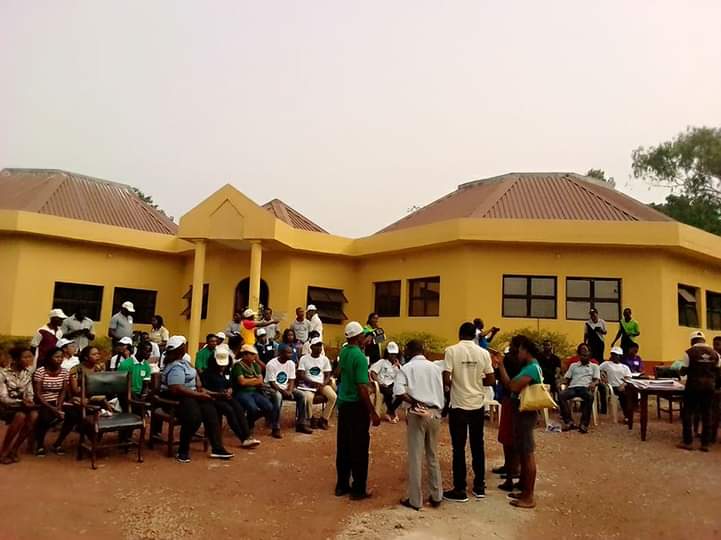
HRCRC ADDRESSES EZE BRUGBALA IN COUNCIL

Still on our mandate, HRCRC was privileged to address the Eze in Council, HRH Eze Chales Mkpuma, the Eze brugbala of Ezzama Kingdom and his chiefs / cabinet; and also a few members of the public who had gathered for the council meeting.
Seizing the opportunity to intimate them on our intended visits to their communities to canvass for peace especially in thee forth coming elections.
Preaching HRCRC, the gospel of Peace, Justice, Equity and the Rule of Law were HRCRC’s Ag Dir George, Moses and Jude (Peace Building dept) and Dr Orji (Chairman Onueke branch).

Exif_JPEG_420
Exif_JPEG_420
Exif_JPEG_420
Exif_JPEG_420
Exif_JPEG_420
Exif_JPEG_420
Exif_JPEG_420
Exif_JPEG_420
Exif_JPEG_420

Goal Delivery July 2018

Justice and Mercy – In the spirit of these Godlike twin concepts, the Chief Justice of Ebonyi State, His Lordship Alloy Nnwankwo embarked on a goal delivery on the 19th and 20th of July for inmates incarcerated in Afikpo and Abakaliki Prisons respectively; both in Ebonyi State. The exercise saw to the outright discharge of several inmates, especially those awaiting trial and those with no information filed for them. More lenient bail conditions were granted others. As usual, HRCRC was consulted and deeply involved in the process…

Introduction to ‘Know Your Right’

Hello!

It is KNOW YOUR RIGHTS project. From HRCRC, Abakaliki, we are glad to share this maiden edition with you. Our task today is simple: we want to introduce you to the project.

Think of this story. Ajole is a princess, a daughter of a late wealthy king. Ajole however, did not know who she really was as she was raised by a distant relative. The relative kept the truth about her status from her because she feared she might lose her grip on Ajole as she had overtime, grew to become very close to Ajole. Under this circumstance, Ajole lived in the land like a common folk. Because she did not know who she was, she could not demand to enjoy the privileges that were her due as a princess of the land.

Many people living in our communities today are like Ajole. They have little clue about the weight their status as a citizen of the Federal Republic of Nigeria carries. They equally know less about what forms their rights as humans, beings endowed with certain privileges (rights) which should not be denied. These privileges are not theirs because they are in Nigeria, but specifically because they are human beings. This is why article 1 of the UN Universal Declaration of Human Rights says: “All human beings are born free and equal in dignity and rights”; and with this understanding, article 2 adds that enjoying HRs is not based on distinction of any kind (race, colour, sex, language, religion, ideology, nationality, origin, soical status, etc.).

Another dimension to ignorance about rights concerns grievance mechanisms (ways individuals can seek redress for violated rights). What can one do if one’s rights is violated? Who can offer help to victims of rights violations? And what instruments of laws guarantees the protection of rights?

KNOW YOUR RIGHTS is specifically designed to address these concerns. We want to expose viewers to basic knowledge on human rights. Because of the limitation of this forum (the need to keep post simple and short), our aim is rather minimal: to stimulate in our readers, enough curiosity to enable them seek knowledge about HRs and through this means, become empowered to promote and defend human rights as it concerns them and others.

To start with, we will introduce today, the concept of human rights (HRs). Obviously, it concerns the human person, not just one individual, but human beings of all ages, cultures, states, races, ethnic backgrounds, regions, creeds, places and other categories that may be existing. HR principle says, this being called the human, possesses dignity and value (you can call it, God-given) which calls for respect. Systems, institutions, cultures, persons and anything else created by humans owe the being this obligation of respect. Thus, we might say, HRs are privileges that any human being qua (as) human being is meant to enjoy. To deny the human person this respect is to violate the person’s dignity and value.

You can also think of HRs as fundamental requisites needed for each human being to lead a minimally good life. HRs include rights to life, liberty, education, fair hearing, etc (we shall explore these and others in subsequent posts). For instance, you will agree with us that when people’s need for security is met, they can have the opportunity to live and pursue self-developing goals. However, like Ajole’s relative, institutions have not helped to educate many people about these rights. Like her, they tend to consider it not necessary, perhaps, because acquiring such knowledge would shake status quos which benefit them.

Thus, we consider it necessary to push back the knowledge gap and contribute to growing your awareness of rights issues and how to address them. We shall look at what constitutes human rights, what their attributes are, instruments that guarantee their protection, and mechanisms to address their violations.

We are going to leave it at this junction (and please, do stay tuned for the upcoming post by next Wednesday). For today, what you can take home is this: If you don’t know what your rights are, you can’t know if they are being respected, protected and made real. Under same guise, you will not be able to ascertain the limits to which you must respect the rights of others. Meanwhile, to spice things up, why not drop in your contributions and questions pertaining to this post in the comment section. We will engage you and also follow them up in our subsequent post. And please, don’t forget to share/like our page/posts.

Many thanks!

Contributors: C. O. Ikegbunam Esq.
C. A. Nwankwo Esq.
D. A. Okoliko

Disclaimer:
This is a free educational material and not a source of legal advice. If you need any, please consult your lawyer.
MY RIGHTS AS A PERSON

Welcome to our second post on Know Your Rights media project.

Our interest today is to understand what constitutes rights for an individual, and how this relates to other peoples rights. As usual, we shall begin with a story.

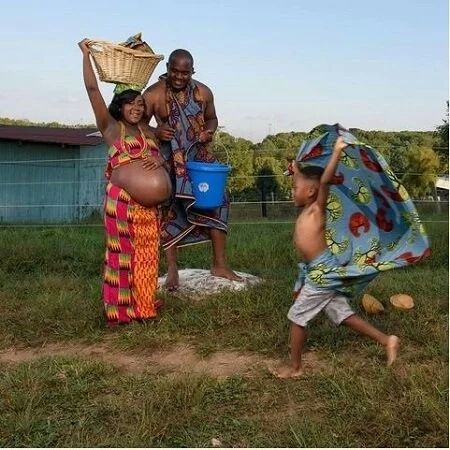
Evelyn and Sandra were very good friends. It happened that both friends became pregnant with Sandra being in her 9th month and Evelyn 2 months and 2 weeks less. One day, they both got into hot quarrel which eventually led to a fight. In the process, Sandra gave Evelyn a heavy kick on her pultruded stomach. Both friends developed pregnancy complications as result of the fight. Sandra immediately went into labour, was rushed to the hospital and delivered a baby girl with much ease. On her part, Evelyn equally got into premature labour and had to be forced to deliver a premature baby girl through C-session. For Evelyn, it was a narrow escape as both mother and child nearly missed chances. Evelyns husband is furious and wants Sandra to pay for the problems she caused, including the pains and trauma he went through during the trying times for his wife. Sandra and her husband believes the problems wouldnt have arose were it not for Evelyns running mouth. The neighbours who witnessed the fight, and many of whom had to assist the women to access help were equally disappointed of the duos public nuisance

About this story, we might ask:

$Does Sandra have a right to react to provocation?

$To what extent can she react?

$Do the two women need to consider the impacts of their actions (fighting) on others (the babies in their wombs, their husbands and the neighbours)?

These questions are key to understanding the scope and nature of rights as personified realities. It is true that as an individual human person, I am meant to enjoy certain rights/privileges without inhibition. But how are my rights related to those of others in my web of relationships? For instance, under the pretence of freedom of expression (enshrined in Nigerian Constitution and laws), many believe that they can go about saying anything about any person regardless of the truth-content of their expressions. Such a people represents Evelyn in the story above; they seem to possess running mouths. In similar nature, the rights to self-preservation covered in international instruments like UN Universal Declaration, article 3 (right to life, liberty, personal security), is sometimes interpreted to include unbridled act of self-defence at the slightest provocation. This is the case of Sandra in the story. She and her husband felt justified on the ground that Sandra acted out of provocation.

The point missed by these people (the Evelyns and Sandras) is that rights and responsibilities are co-extensive. They always go hand-in-hand; hence, the saying, YOUR RIGHTS STOP WHERE MINE BEGIN. While rights are fundamental privileges that are everyones due, they are never absolute in the sense that it considers relationships. This is why Okpara Okpara writes in Human Rights: Law & Practice in Nigeria (2005:42) that every human being is both the subject and object of rights. As subject, the being is expected to initiate actions to further the respects of rights, and as object, the being is a recipient of respects of rights. If we understand this correctly then, as we demand respect of our rights from others, we would equally deem it fit to extend it to others.

Consequently, it is important to highlight the responsibilities of the two women to the babies in their womb. Especially, in the context of Nigerian law which considers the foetus, though not as a human person, but criminalizes any act with intent to cause harm to the unborn child (covered in both Criminal and Penal Code, and the Constitution which is admittedly pro-life).

In the foregoing, it seems appropriate to assert thus, that taking care to respect the rights of others go a long way to promote ours. It works this way. If everyone respects everyone elses rights, individuals rights become safeguarded.

To conclude, let us take note of our take-away point: if human rights is everyones due privileges, then, no one is meant to suffer any disadvantage with regard to respecting rights. But this can only happen if people have appropriate attitude to rights consideration; it is one that always bear in mind the responsibility to respect the rights of others.

Thank you for the read, and please, share/like our posts/page. Also, dont hoard your thoughts about our posts; comment and let us know what you think.

Contributors: C. O. Ikegbunam Esq.
C. A. Nwankwo Esq.
D. A. Okoliko

[Picture: Nairaland]