vkyfytkuy yyutf iyuyfviytfy oyy o itcrtxjytiuuiy
Blog
-
HRCRC TRAINS BRANCHES ON CHILD RIGHTS ON Monitoring, Documenting, Reporting and Management of Child Rights Cases.
While it is readily acknowledged in many fora that children are vulnerable members of the
society, mechanisms to ensure their protection and care is scarcely provided for in many
societies. Ebonyi State is not an exception. On the one side, cultural belief places high values
on child birth and rearing (a factor which has contributed to high rate of child birth in the
state). On the other side, the apparent belief that children ‘belong’ to their parents and
guardians, as if that invalidates their specific rights, often contribute to unintended effects on
the relationship between the former and the latter. The unintended effects are various child
rights violations which have become incessant in Ebonyi State in recent times. Almost on a
weekly basis, a female child is raped, and a child is inflicted grievous injuries under the pretext
of discipline. Majority of these crimes against children are either committed by relatives of
the children or encouraged by them.Against this background, Human Rights and Conflict Resolution Centre (HRCRC) designed
specific intervention to address the challenge of Child Rights violations in Ebonyi State. The
intervention named “Enhancing the Rights of the Child in Ebonyi State” ran from August 2015
to December 2016 and with an extension up to March 2017.The Acting Director of HRCRC, Mr Dominic A. Okoliko, warmly thanked and welcomed
everyone to the training. He drew participant’s attention to the purpose of the training by use
of quick slideshow that revealed 10 shocking cases of child abuse recorded in Ebonyi in recent
time. With this, he said, it should be clear that as community actors, HRCRC Branch members
cannot fold hands while perpetrators of evil against children continue to have field day in
communities. Thus, participants were encouraged to key into the opportunity of the training
and equip themselves with requisite skills to help push back child abuse in the state.
Barr. A. G. Nwankwo keyed into the momentum and helped the group to trace why Child
Rights is such an important talk in this age. He laboured on dissecting the meaning of the
concept, the assumptions underlying it and legal instruments backing up rights of children,
from the international to the state level.
Accordingly, Barr. Nwankwo made the group to understand that child rights can be
considered as a subset of human rights which pertains to the special interests of children. The
aim is to give special recognition to distinctive sets of rights which are of children’s and thus
promote respect for their dignity as human beings.At 11.35 am, Mrs Flora Egwu of Child Protection Network (CPN) was introduced to the group
for her presentation. It was not quick before the group observed the passion with which she
spoke on the issues of child rights in Ebonyi State.At 2.05 pm, the third session began. Dominic Okoliko took the group through the theme of
documentation and reporting.
Participants were made to understand that documentation is “a systematic recording of the
results of the investigation of an event or the examination of a child rights situation”.
He introduced participants to step by step procedures of ensuring documentation and
reporting of issues, and explored techniques for gathering facts about an abuse, as well as
manners of handling victims of abuse. Some techniques treated included mission to scene of
incidence, observation and interview. He also introduced the template form to be used in
documenting child rights issues and went through it with the group. Lastly, he shared with
the group safety and security tips to ensure protection of monitors and victims.The fourth session treated Child Rights Case Management and was taken by Mr Godwin Igwe
of the Ministry of Women Affairs and Social Development. Like other speakers, he was full of
passion and shared in-depth stories from the field. He said that as child protection service
providers, we are in a way, social workers. As such, our role entails investigating reports of
child rights abuse and neglect, assessing the degree of harm and the ongoing of risk of harm
to the child, determining whether the child can remain safely in the home or should be placed
in the custody of the state, and work closely with the family and other agencies regarding
appropriate plans for the child’s safety and well-being.Outcomes include
▪ Expanded knowledge of child rights issues for the branch members
▪ Knowledge of better strategy for monitoring
▪ Acquisition of documentation and case management skills
▪ Created awareness on child rights through expanded publicity of trainings
activities in media outlets (radio and print)The mini project was inspired by the principle of subsidiarity. We believe in empowering
people to take part in the development of their own community. As members of their
community, living and working in their midst, HRCRC branch members are more posed to
impacts in the development of their communities. Our organisational culture entails that
where it is not possible to be personally present, we raise up men and women in the
communities, train and equip them to champion human rights cause, while we monitor and
assess their performances from time to time. Our approach has worked to help communities
to own up projects aimed at increasing awareness of human rights issues. Also, it boosts our
grassroots presence and helps us to enjoy wide acceptance at the local levels.HRCRC Branch members are network of volunteers who have the interest of the marginalised
at heart, and work to advance their rights and well-being. As such, this intervention which
targeted empowering local actors addresses the need of local capacity building which can
ensure more protection of the marginalised.Child rights remains vital issue needing intervention in Ebonyi State. This is so because
violations of child rights continue to happen, often in remote places where authorities hardly
beam search lights. Thus, the initiative of HRCRC, Abakaliki to empower local community
actors such as HRCRC Branch members to become agents of change across Ebonyi State is
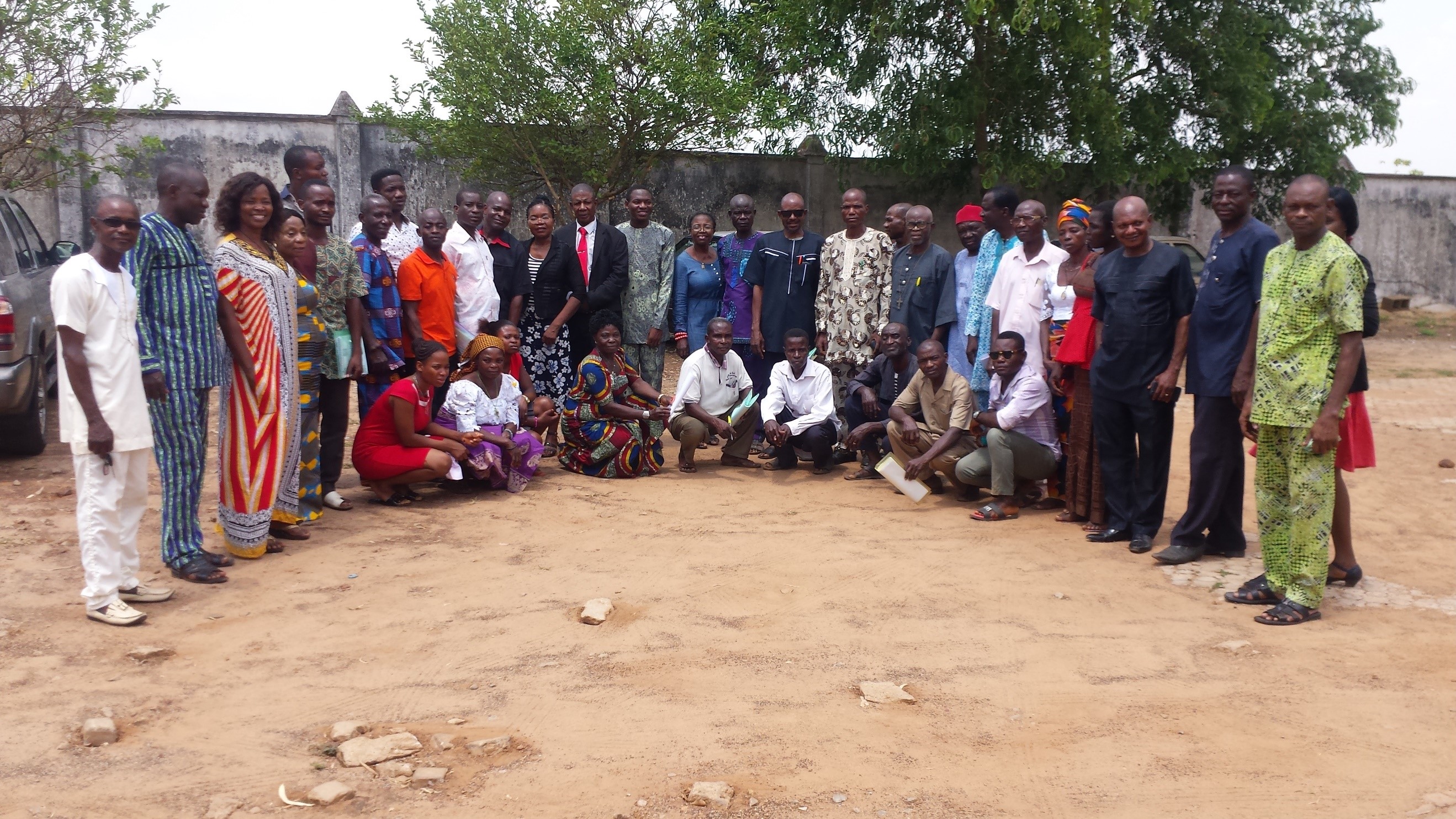
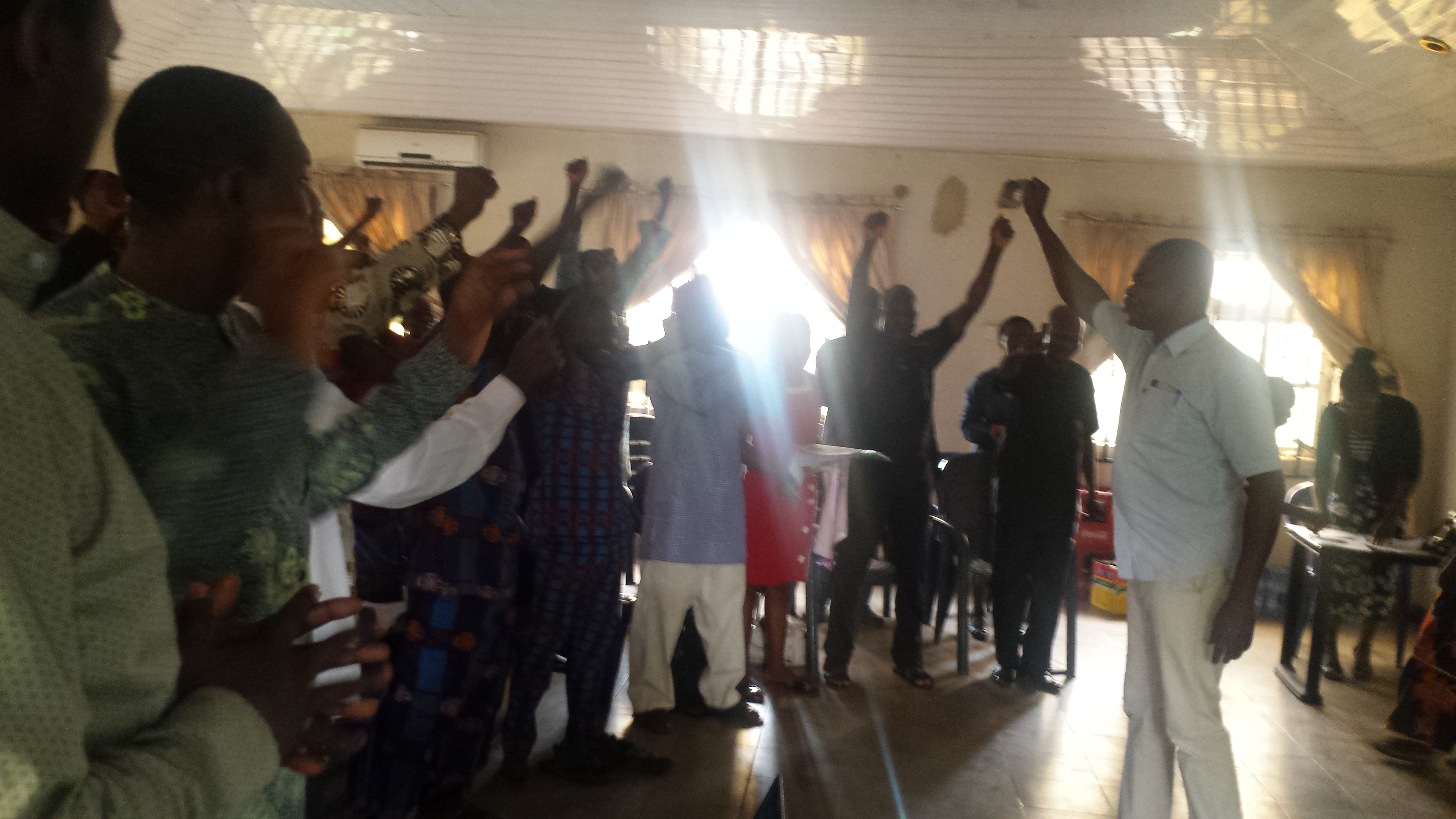
timely. The one-day training held on the 3rd of March 2018 had 30 HRCRC branch member
participants and 3 media representatives. The media personnel further gave it boost by
publicising the intervention, and thus, multiplied the impacts. At HRCRC, we are grateful for
the support of Misean Cara and St Patrick’s Missionary Society whose financial contribution
made the intervention possible.